

In a moment of profound legal finality, the South African Constitutional Court has fundamentally altered the rules of the game for the millions living under the umbrella of refugee status. By barring repeat asylum applications, the court has ended a long-standing practice where individuals could cycle through the system to maintain a continuous, albeit precarious, legal presence. This is a definitive win for the Department of Home Affairs, but it signals a much more complex reality for the continent's mobile populations.

Context
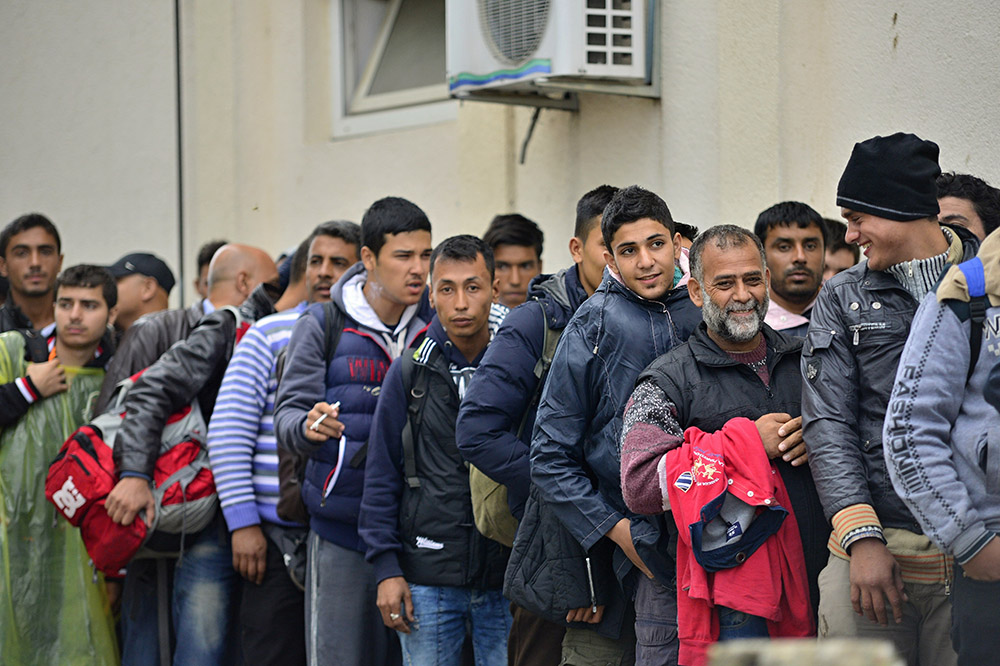
To understand why this ruling arrived in May 2026, we must look at the years of administrative congestion that preceded it. For decades, South Africa has been a primary destination for those fleeing instability in the SADC region and beyond. The asylum system was designed to be a one-way path to permanent status or repatriation, but in practice, it became a mechanism for extended temporary residence. As the Department of Home Affairs struggled with massive backlogs and the sheer volume of applicants, the practice of 're-applying' for asylum as an extension of existing status became a common, if controversial, survival strategy. This tension between the state's capacity to manage its borders and the humanitarian need for flexible status has been building since the early 2000s. This ruling is the culmination of a decade-long push to move from a fluid, porous system toward a more rigid, state-centric administrative framework.
Facts

The core of the legal battle was a case won by the Department of Home Affairs in the Constitutional Court. The ruling clarifies that repeat asylum applications—where an individual uses a new application to effectively 'renew' their status—are no longer permitted. This decision was driven by the need to prevent the 'looping' of the system, where the same individuals could remain in a state of permanent transition. The court's ruling is meant to ensure that once a decision is made on an initial claim, that decision is final unless there is a significant change in circumstances that warrants a fresh adjudication. While the specific number of people affected remains a matter of debate among migration analysts, the ruling is absolute: the era of using repeat applications as a tool for extended legal stay is officially over. This is a victory for the state's efforts to streamline its rolls and reduce the administrative burden on Home Affairs offices.
Human Impact

The human impact of this ruling is immediate and deeply personal. For a family in a township in Gauteng, or a worker in a Cape Town warehouse, the end of repeat applications means their legal clock is now ticking in a more visible way. For many, the 'repeat' was not about avoiding the law, but about navigating a system where permanent residency was often out of reach. This decision could lead to a sudden wave of 'legal limbo'—where individuals are no longer eligible for a new application but have not yet been granted permanent status. We may see a split in the community: some will move toward formalizing their status through other channels, while others may fall into the shadows of the informal economy, effectively becoming undocumented because their single-shot asylum window has closed.
Analysis
From a diaspora-analytical perspective, this is a move toward 'order' at the potential cost of 'humanity.' The Department of Home Affairs is essentially trying to solve a resource problem—too many people, too few resources—by tightening the rules of eligibility. By cutting off the ability to re-apply, they are forcing a resolution. This is a classic state-building move: the state wants to know exactly who is in the country. However, this creates a massive divergence between the legal reality and the lived reality of migrants. If an individual's original asylum claim was based on a political situation that has since shifted, they may find themselves 'legally' safe but practically without a valid status. This could lead to a two-tier system: a visible tier of those with successful, settled status, and an invisible, increasingly precarious tier of those whose 'one-shot' applications left them in a state of permanent temporariness. This is not just a South African issue; it is a signal to the entire African continent that the era of flexible, fluid migration is being replaced by a more rigid, bureaucratic management of people.
Counterpoints
Not everyone agrees with the finality of this ruling. Human rights advocates, such as those within the Lawyers Indigenous for Refugee and Migrant Rights (LIRR), argue that the ruling ignores the reality of 'evolving claims.' They argue that a person's need for asylum can change over time, and a single application might not capture the full scope of their vulnerability. Another perspective comes from administrative efficiency experts, who suggest that while the ruling is necessary, it may lead to a massive surge in 'appeals' rather than 'applications,' essentially trading one form of legal backlog for another. They argue that without a robust mechanism to handle these transitioning individuals, the court is simply trading one administrative headache for a more chaotic, decentralized one.
What Happens Next
The next 18 to 24 months will be a critical period of testing. We must watch how the Department of Home Affairs manages the transition of the existing millions of applicants. Will there be a grace period? Will there be a mass 'status-check' event? The key trigger points to watch are the implementation of new digital tracking systems and the volume of appeals reaching the High Courts. If the state does not provide a clear mechanism for those whose status is now in question, the pressure on the South African social-welfare-state will increase as the 'legal-but-unstable' population grows. The diplomatic response from the SADC region will also be vital, as cross-border movement is often the first casualty of tightened domestic laws.
Takeaway
The single most important thing to take from this is that the era of the 'perpetual applicant' is ending. For the diaspora and the migrant community, the question is no longer 'how long can my application last?' but 'what is my permanent path?' This shift from a continuous loop to a linear path is the defining characteristic of this new legal reality. We must ask: can a system built on finality truly manage a population defined by movement?