
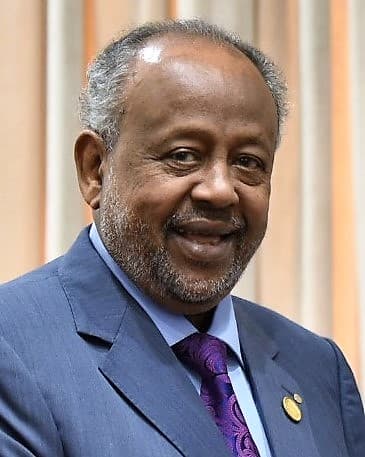
On this May 13, 2026, the political atmosphere in Djibouti is thickening with the anticipation of the upcoming election cycle. For decades, the presidency of Ismail Omar Guelleh has been the central axis around which the nation's stability has rotated. Yet, as the 2026 vote approaches, the question is no longer just about who will lead, but whether the political architecture of the nation can withstand the tension between long-term continuity and the mounting demand for systemic change.

Context

To understand the 2026 landscape, one must look back to 1999, when Ismail Omar Guelleh assumed the presidency. Since then, Djibouti has leveraged its unique geography—sitting at the mouth of the Red Sea—to become an indispensable node in global maritime trade and a vital theater for international military operations. The nation has navigated the complexities of the Horn of Africa's regional conflicts, maintaining a delicate peace through strategic alliances with global powers. However, the structural reality is that while the state has remained stable, the political institutions have seen limited evolution. The current period is a convergence of historical inertia and modern pressures: the need to maintain the security-for-rent model while managing an increasingly educated and urbanized domestic electorate that seeks more than just the status quo.
Facts

As of mid-2026, the official political landscape is dominated by the Union for Presidential Majority (UMP). While there is no single consolidated opposition, various coalitions represent fragmented voices of dissent. Official state-level data indicates that the incumbent's grip on the security apparatus remains absolute, with the military and police forces serving as the bedrock of the administration. While exact polling figures for 2026 are still emerging, political analysts observe a widening gap between the official narrative of national unity and the granular reality of regional clan-based political competition. It is important to note that while the international community recognizes the current government as the legitimate authority, the degree of genuine competition in the upcoming election remains an unconfirmed but central variable for observers.
Human Impact
The stakes of the 2026 election are not merely theoretical; they are deeply felt by the citizens of Djibouti. For the urban youth in Djibouti City, the election represents a question of economic mobility. While the state-led economy has provided stability, the benefits of the transit-and-base economy do not always trickle down to the domestic labor force. For many families, the fear is that another term of the status quo will lead to economic stagnation despite the country's strategic wealth. In the more rural or clan-aligned regions, the political tension is tied to the distribution of resources and the influence of local leaders within the national framework. The human reality is a population divided between the desire for the predictable stability of the current regime and the uncertain but hopeful promise of political renewal.
Analysis
Analytically, the 2026 election is a test of the 'Security-Stability Paradox.' The current administration's power is derived from its ability to guarantee regional security, which in turn attracts the foreign military presence that funds the state. This creates a cycle where the regime is the guarantor of the very stability that keeps it in power. However, the risk is that this focus on external-facing security can lead to internal political stagnation. If the election is seen as a mere rubber-stamping of the incumbent, it may preserve stability in the short term but risk eroding the legitimacy of the state among the domestic population. This is not just a local issue; it is a regional pattern where leaders leverage geopolitical importance to maintain domestic control. The global powers—the US, France, China, and others—act as silent stakeholders. They benefit from a predictable Djibouti, but they also need a stable environment for their massive investments. If the 2026 election triggers domestic unrest, the international community's priorities may shift from supporting the current administration to managing the fallout of a crisis. Thus, the central conflict is between a controlled, managed democracy that preserves the existing power structure and a more open, potentially volatile democratic process.
Counterpoints
There are two distinct perspectives on the 2026 election. First, proponents of the current administration, such as certain leaders within the UMP, argue that the election is a necessary mechanism for continuity. They contend that given the volatility of the Horn of Africa, any significant shift in leadership could destabilize the vital maritime corridors and threaten national security. They see the current structure as the only viable path for growth. Second, a critical group of civil society actors and opposition-leaning analysts argue that the election is a 'controlled illusion' of change. They argue that the existing institutional framework is designed to prevent any real transfer of power, meaning the election is not a contest of ideas but a ritual of consolidation. They suggest that without radical reform, the election will only serve to mask the growing divergence between the state and its people.
What Happens Next
The path forward will be determined by several key signals in the coming months. First, the formation of formal opposition coalitions will indicate whether there is a unified front to challenge the incumbent. Second, the international community's level of engagement—specifically the degree of pressure or support from the US and France—will be a critical factor. We must also watch for the legislative-level shifts in election-related laws that could alter the playing field. The timeline leading up to the vote will be marked by theseening of political lines, with the potential for sudden shifts in domestic sentiment as the election date approaches.
Takeaway
The fundamental question is whether the 2026 election will be a moment of democratic evolution or a consolidation of the status quo. We must ask: can the current political structure accommodate genuine political competition without sacrificing the regional stability that the global powers depend on? The answer lies in whether the institutions can transition from being tools of the regime to being arbiters of the national will. Watch the tension between the security of the state and the aspirations of the people.