
The map is no longer a static parchment; it is a living, pulsing network of influence that shifts with every diplomatic handshake and every technological breakthrough. As of May 2026, the global landscape is defined by a profound tension: the old-world desire to draw hard lines around regional spheres versus the modern reality of fluid, interconnected interests. We are witnessing a moment where the traditional anchors of stability are being tested by a new, decentralized power dynamic that defies easy containment.
Context

To understand the present, we must look back at the structural shifts that have occurred over the last decade. For much of the 20th century, spheres of influence were defined by the bipolarity of the Cold War—clear, predictable, and physically demarcated. However, the transition from a unipolar moment to a multipolar era has dismantled those predictable borders. The rise of regional power-brokers in the Middle East, the expansion of the BRICS+ bloc, and the technological dominance of East Asian hubs have created a complex web of overlapping interests. Why is this happening now? Because the economic gravity has shifted. The institutions established in 1945, like the UN Security Council, are struggling to reconcile their historical mandates with the reality of a world where regional security is often managed through local coalitions rather than global consensus. This friction between the old institutional architecture and new geopolitical realities is the engine of our current instability.
Facts

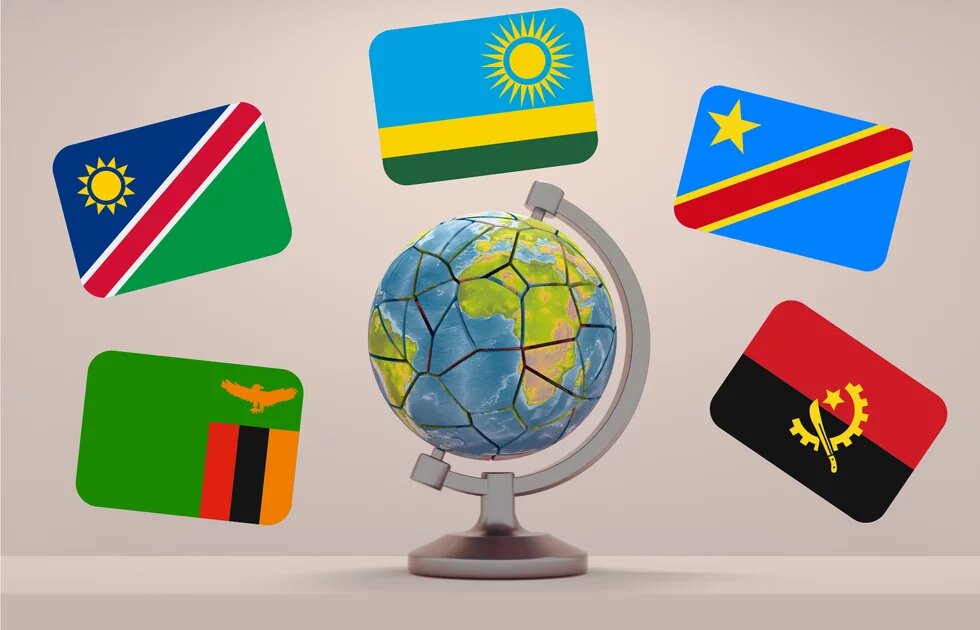
Current geopolitical data suggests a fragmentation of influence. In the Middle East, the shifting roles of regional actors like Turkey and Israel demonstrate how traditional alliances are being re-evaluated in light of local security needs. In Africa, the African Union's efforts to institutionalize collective security face the challenge of varying levels of economic development among its member states. While there are no single, universally agreed-upon metrics for 'influence,' we can observe the expansion of strategic partnerships—such as the growing maritime-focused alliances in the Indo-Pacific—as a concrete indicator of shifting power. Experts in international relations suggest that the 'influence' of a nation is increasingly tied to its control over critical supply chains and digital infrastructure. While the exact degree of this shift is subject to debate, the trend toward regionalization is clear: power is being decentralized into regional blocs that act with varying degreess of autonomy from traditional global leaders.
Human Impact

The human cost of these shifting spheres is felt most acutely in the borderlands and the urban centers of developing nations. When a sphere of influence shifts, it isn't just a change in a diplomatic treaty; it is a change in the price of grain, the stability of a local currency, and the security of a family's home. In regions where great-power competition manifests as proxy influence, citizens face the constant threat of being forced to choose sides in conflicts they did not start. For the young professional in Nairobi or the farmer in the Levant, the 'sphere' is a question of whether their economy is tied to a stable partner or a volatile patron. Economic volatility and political uncertainty are the collateral damage of these strategic maneuvers, often leading to migration patterns that reshape the demographic landscape of the entire globe.
Analysis
From a cultural and systemic perspective, the current era is a struggle between 'sovereignty' and 'alignment.' In the old model, you were either in or out of a sphere. Today, actors are attempting to exist in multiple spheres simultaneously—a concept often called 'multi-alignment.' This is a strategic attempt to maximize benefits from different power centers. For example, a nation might rely on one power for security while leaning on another for trade and technology. This creates a highly complex, often contradictory, web of relationships. The benefit of this model is a potential for greater flexibility and economic leverage. However, the risk is 'strategic overextension'—where a nation becomes so entangled in competing interests that it loses the ability to act decisively in its own national interest. We see this as a recurring pattern: the tension between the desire for autonomy and the practical necessity of dependency. The winners will be the states that can maintain the integrity of their domestic governance while navigating these external pressures without becoming a vassal to any single power. This is not just a political game; it is a survival mechanism for the 21st century.
Counterpoints
Not everyone agrees that multi-alignment is the path forward. Realist-school analysts, such as those following the tradition of John Mearsheimer, argue that in a multipolar world, 'spheres of influence' will inevitably become more rigid as great powers vie for dominance, making the idea of fluid, multi-aligned states a dangerous illusion. They contend that the competition will force a return to clear-cut blocs. Similarly, some proponents of 'Strong State' theory argue that trying to balance multiple masters leads to instability and that true security only comes from a single, dominant alignment. They suggest that the current fragmentation is merely a prelude to a new era of hard-power competition where there is no room for nuance. While these arguments highlight the risks of the current trend, they often underestimate the agency of regional actors who are increasingly able to leverage their specific strengths to defy these old-school deterministic models.
What Happens Next
Looking ahead, the key signals to watch are the outcomes of regional security summits and the formation of new trade-based alliances. Watch the 2026-2027 period closely, as we will see if the current trend of 'multi-alignment' stabilizes or if the pressure from global powers forces a more decisive 're-blocing' of the world. Specifically, the diplomatic maneuvers within the African Union regarding the security of the Sahel and the stability of the Horn of Africa will be a bellwether for how regional agency can shape global outcomes. We must also watch the technological 'border-crossings'—where the control of new AI-driven infrastructure becomes the new frontier of territorial influence. If these regional actors can successfully codify their own rules of engagement, we may see a more stable, if more complex, global order.
Takeaway
The most important takeaway is this: the concept of a 'sphere of influence' is no longer a fixed territory to be conquered; it is a dynamic space of negotiation. We must move away from the idea that we are either 'inside' or 'outside' a power's reach. Instead, the real question for every nation is: how much of our own sovereignty can we preserve while engaging with the gravity of global influence? The challenge is to prevent our strategic interests from becoming the tools of someone else's agenda. We must ask ourselves: are we building a future of partners, or are we merely managing the boundaries of our own containment?