
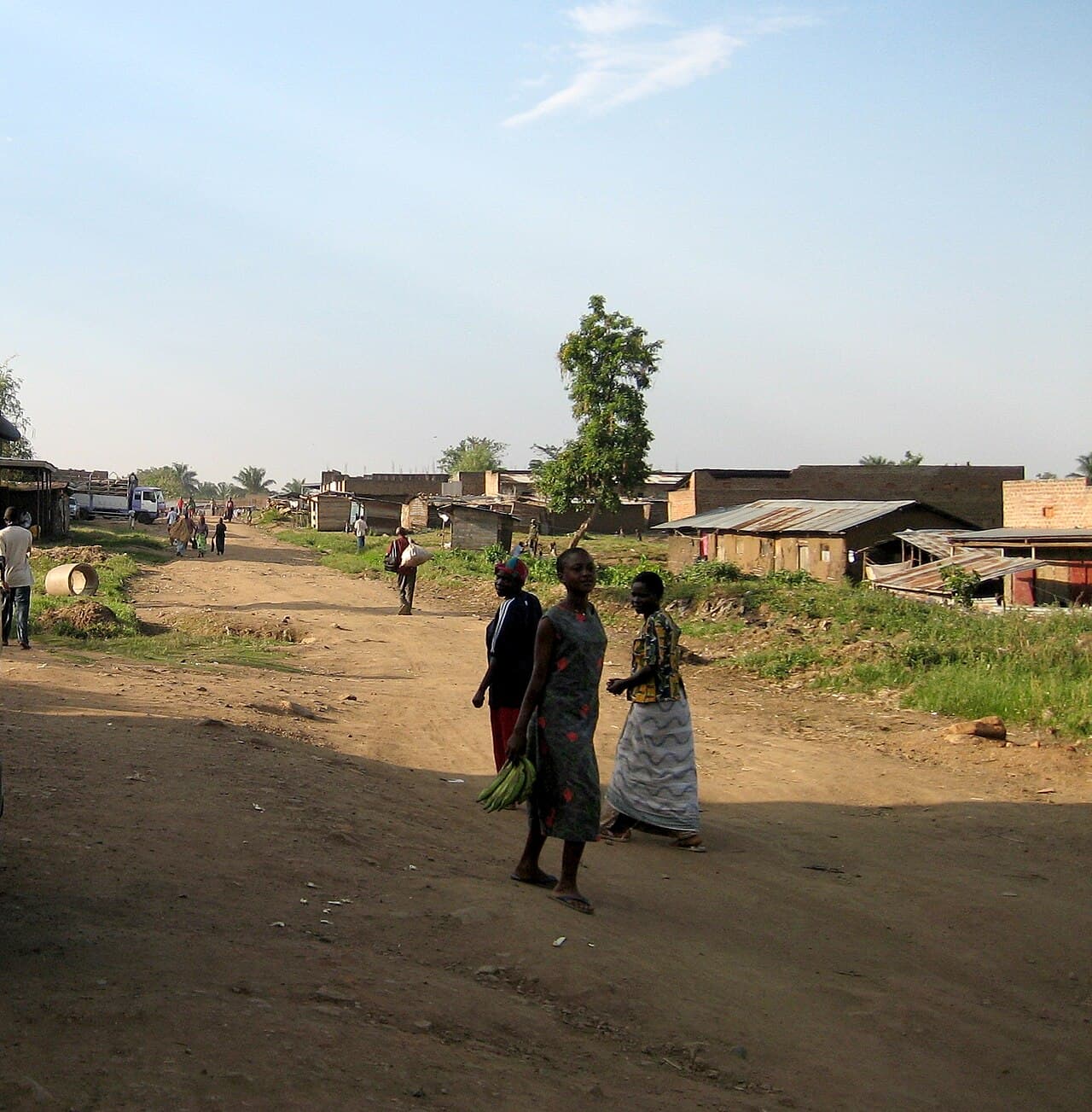
Uganda just slammed its border with the DRC shut for four weeks—but the Bundibugyo Ebola outbreak has already spiralled to nearly 1,000 suspected cases in the east. On the Ugandan side of the crossing at Mpondwe, truck drivers huddle under tarpaulins, their cargo of coffee and electronics stalled indefinitely. Health workers in hazmat suits have set up hand-washing stations in the midday heat, while in the DRC's North Kivu province, families who depend on cross-border trade are waking up to empty markets and mounting fear.
Context
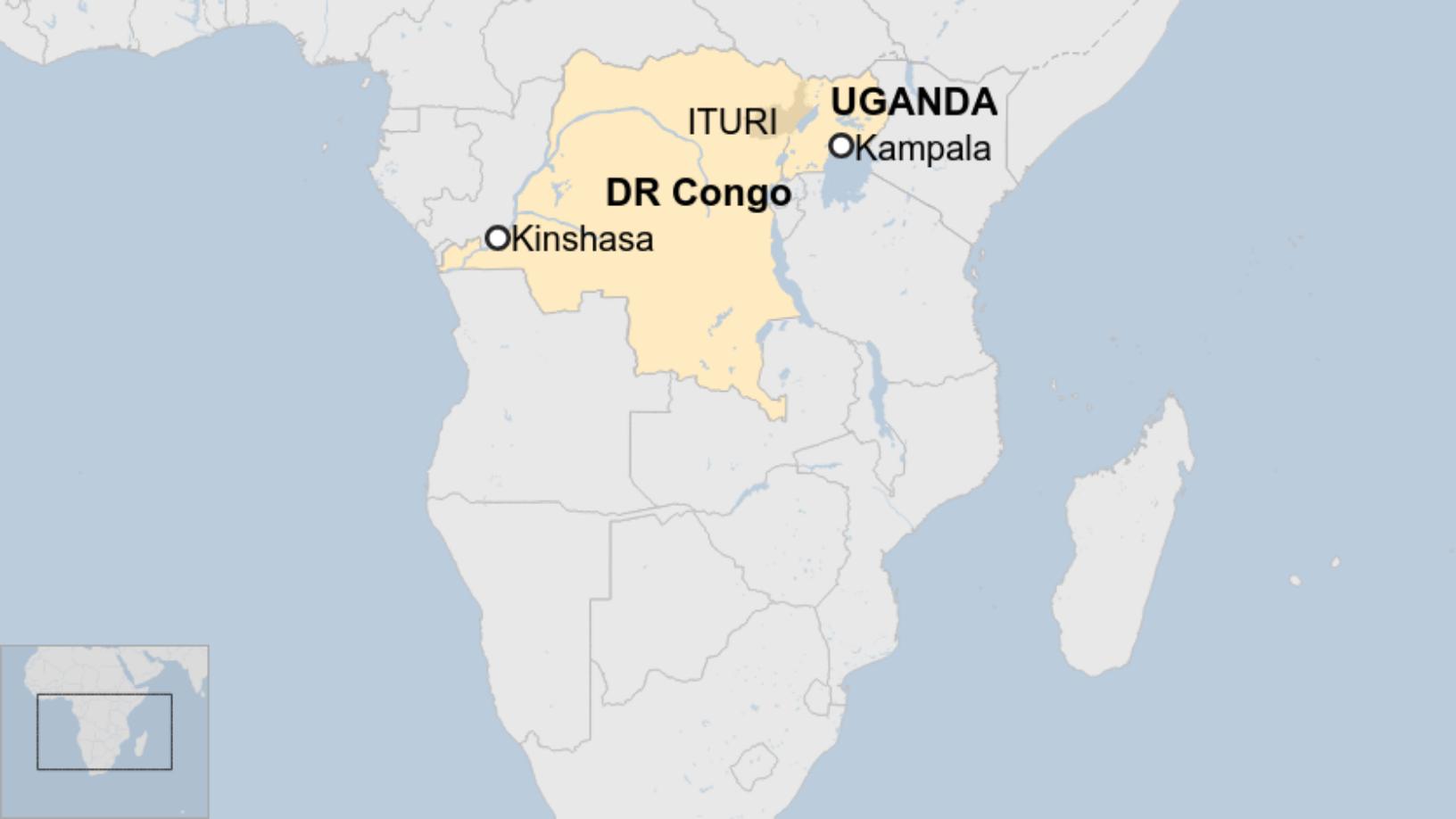
This is not the first time the Bundibugyo strain has terrorised the region. First identified in 2007 in Uganda's own Bundibugyo district, the virus has a case fatality rate of around 40 percent—lower than the Zaire strain but still devastating. The current outbreak was declared in eastern DRC on 18 March 2026, according to the World Health Organization. Since then, it has spread across three health zones in North Kivu and Ituri provinces, areas already scarred by decades of armed conflict and displacement. Uganda shares a 765-kilometre border with the DRC, and the porous frontier—dotted with unofficial crossings used by miners, traders, and refugees—makes containment a logistical nightmare. The East African Community, which includes both Uganda and the DRC, has convened emergency health meetings, but travel restrictions remain uncoordinated. Why now? The surge in suspected cases—636 confirmed by PCR as of 28 May, per the DRC Ministry of Health, with 312 more awaiting results—triggered Kampala's decisive move. Ugandan President Yoweri Museveni cited a 'high probability of cross-border transmission' in a televised address on 28 May, though critics note that Kinshasa was not formally consulted before the closure.
Facts
Verified data from the DRC National Institute for Biomedical Research (INRB) indicates that the Bundibugyo strain has infected 149 people and caused 61 deaths as of 28 May 2026—a case fatality rate of 41 percent. However, the actual toll may be higher: the WHO reports 987 suspected cases, with many in remote areas where testing is delayed. Uganda's Ministry of Health confirmed on 29 May that no cases have been detected inside Uganda so far, but surveillance teams have screened over 12,000 travellers at border points since mid-April. The four-week closure, effective from 29 May, bans all non-essential cross-border movement, including markets, funerals, and school exchanges. Essential cargo—food, medicine, fuel—is allowed but only after mandatory disinfection and driver health checks. The African Union's Africa Centres for Disease Control and Prevention (Africa CDC) has deployed a 20-person rapid response team to Beni, DRC, but acknowledges that 'logistical gaps remain significant'. Meanwhile, the DRC's health ministry has accused Uganda of acting unilaterally, stating in a 29 May communiqué that border closures 'stigmatise affected communities and drive cases underground'.
Human Impact
For women like Amina Kavira, a 34-year-old mother of four who sells dried fish at the Kasindi market, the border closure is a death sentence for her livelihood. 'I buy fish from Beni and sell it here in Uganda. Now I have nothing,' she told UAN reporters on 29 May, standing beside empty crates. Across the border, in the DRC town of Kasindi, health workers report that families are avoiding clinics for fear of being quarantined. The economic ripple is acute: the DRC's eastern border trade with Uganda is valued at an estimated $340 million annually, according to the United Nations Conference on Trade and Development. School closures in the DRC's affected zones have left 120,000 children out of class since mid-May. In Butembo, a city of 1.2 million, the price of cassava flour has jumped by 60 percent in two weeks—because imports from Uganda have stopped. The trauma echoes previous Ebola outbreaks: survivors of the 2018–2020 Kivu outbreak, which killed 2,200 people, now relive the fear of quarantine camps and body bags.
Analysis
This border closure exposes a deeper fracture in African pandemic governance—the tension between national sovereignty and regional solidarity. Uganda's unilateral move, while epidemiologically defensible, undermines the African Union's 2022 'Pandemic Prevention, Preparedness, and Response Framework', which explicitly discourages blanket travel bans without multi-lateral consultation. Who benefits? Uganda's domestic public health system gains breathing room, and President Museveni—facing re-election in January 2027—can project decisive leadership to a nervous electorate. Who loses? The DRC's eastern economy, already battered by militia violence and mining exploitation, takes another hit. It also loses the political face: Kinshasa has limited control over its borderlands, and the closure may push illicit trade routes underground, making surveillance harder. By the numbers, the East African Community's common market protocol—which guarantees free movement of goods—has been suspended indefinitely for this corridor. The larger pattern: since 2020, African nations have closed borders an average of 1.7 times per year over health emergencies, often without data-sharing mechanisms. The real cost is trust—between governments, and between citizens and health authorities. As Dr. Placide Mbala, a virologist at DRC's INRB, told UAN: 'A closed border does not stop a virus; it only stops the news of the virus.' This decision will be judged not by how many cases Uganda prevents, but by how many deaths the DRC cannot report because its patients delay seeking care.
Counterpoints
The Ugandan government insists the closure is both necessary and proportionate. 'We have seen what happened in 2014 when a slow response let Ebola cross into West Africa,' said Dr. Diana Atwine, Uganda's Permanent Secretary for Health, in a 29 May press briefing. 'Our first duty is to protect Ugandans.' The Africa CDC, while cautious, has not condemned the closure; its director, Dr. Jean Kaseya, noted that 'each state has the right to decide its border measures under international health regulations.' Some public health experts argue that targeted screening and community engagement could have achieved similar results without the economic trauma. Dr. Yap Boum, a veteran of previous Ebola responses, told UAN that 'border closures are politically popular but epistemologically weak—they don't stop cross-border transmission because people will find ways around.' He points to the 2019 Rwanda-Uganda closure during a Marburg outbreak, which did not prevent 11 cases in Uganda. Yet supporters counter that the Bundibugyo strain, with its longer incubation period and lower transmissibility, may be easier to contain with a hard barrier than the Zaire strain. The debate is not abstract: it pits the logic of epidemiological modelling against the reality of human mobility in a region where family ties, trade, and conflict ignore borders.
What Happens Next
The next critical juncture comes in mid-June, when the first batch of experimental vaccines for the Bundibugyo strain—developed by Uganda's Makerere University in partnership with the US National Institutes of Health—is expected to arrive in Goma. If the DRC can begin ring vaccination within the four-week window, the closure may end on schedule. If not, Uganda's Ministry of Health has indicated it could extend the ban, based on 'real-time epidemiological data.' Watch for: the WHO's Emergency Committee meeting scheduled for 5 June, which may issue broader travel recommendations. Also, the African Continental Free Trade Area (AfCFTA) secretariat is under pressure to intervene, as the closure violates its core principle of free movement of goods. Diplomatically, President Félix Tshisekedi of the DRC is expected to raise the issue at the next African Union summit in Addis Ababa on 12–13 June. One wildcard: if suspected cases emerge in Uganda's own refugee camps—home to over 1.5 million people, many from the DRC—the political calculus would shift dramatically.
Takeaway
The single most important truth a reader must carry away: border closures are never just health decisions—they are political acts that redistribute risk and economic pain. For every case Uganda claims to have prevented, an unknown number of Congolese families may face hunger, missed diagnoses, or extortion at illegal crossings. The true test of this policy is not the case count in Kampala but the trust between two nations that share a river, a history, and a virus. Keep asking: who is paying the price for a secure border—and who decides that price is acceptable?