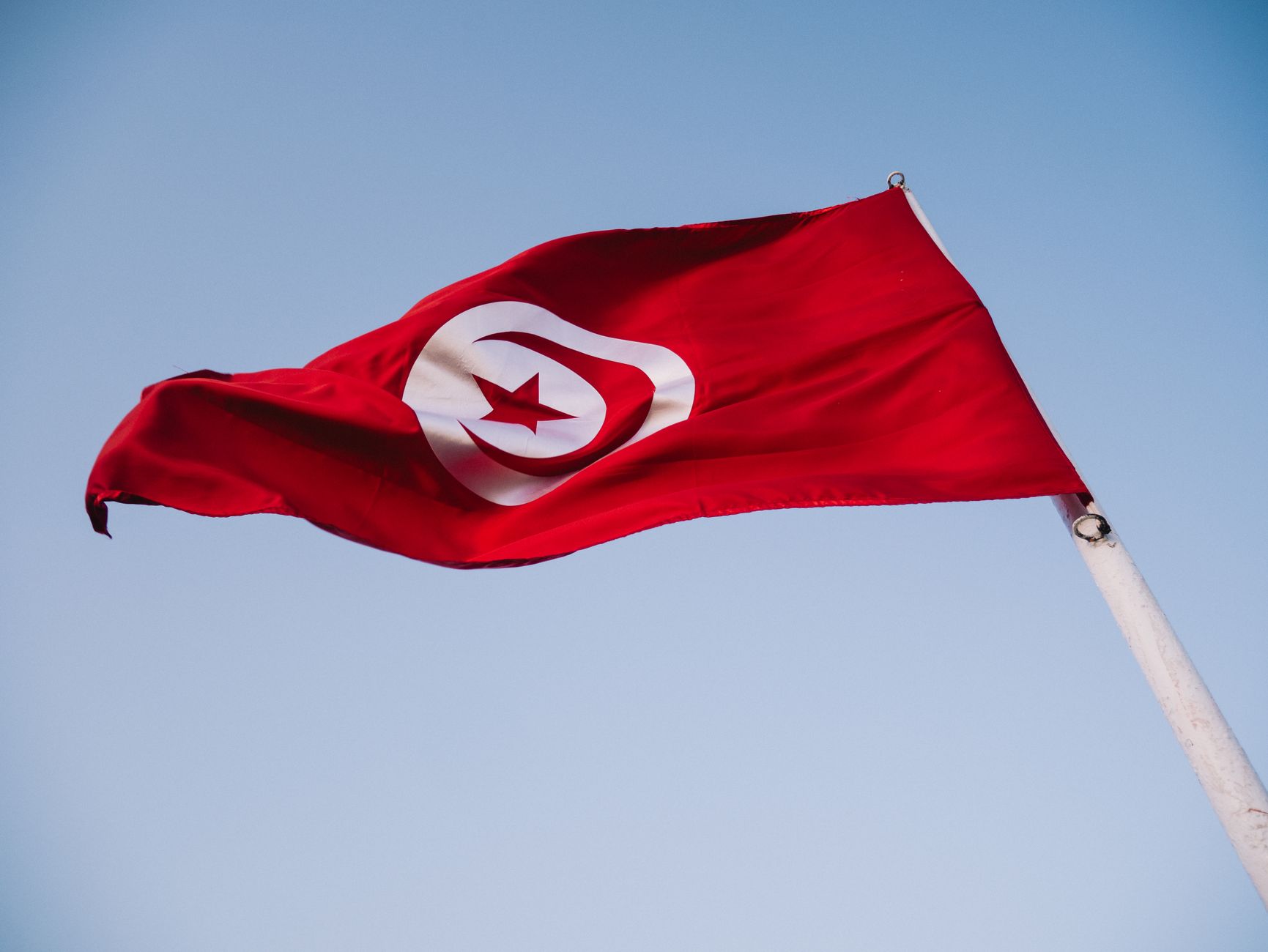
Tunisia is about to become the first Arab nation to forcibly dissolve a media group that helped expose global financial secrets. On Wednesday, the Tunis Court of First Instance adjourned the government’s case against Al Khatt — the parent company of the Pulitzer-nominated investigative outlet Inkyfada — to June 1. The move comes as Amnesty International releases a detailed brief warning that at least 44 Tunisian NGOs are at imminent risk of dissolution under President Kais Saied’s tightening grip on dissent.

Context
Tunisia was once the Arab Spring’s sole democratic success story. Its 2014 constitution guaranteed freedom of expression and association, and a vibrant civil society — including the Tunisian General Labour Union (UGTT), which helped mediate the democratic transition — earned the country the Nobel Peace Prize in 2015. But since 2021, President Saied has systematically dismantled these checks. He dissolved parliament, rewrote the constitution via a 2022 referendum with a 30% turnout, and granted his government sweeping powers. In 2022, Decree 88 gave the interior ministry unilateral authority to dissolve associations deemed a threat to public order or accused of receiving foreign funds without authorisation. That decree is now the legal battering ram being used against Al Khatt and dozens of others. The International Centre for Investigative Journalism (ICIJ), whose Pandora Papers and Panama Papers investigations include Inkyfada as a partner, has publicly condemned the case, calling it ‘an unprecedented attack on media freedom in the Arab world’.
Facts

The case: On May 18, Tunisia’s interior ministry filed a request to dissolve Al Khatt (literally 'The Line'), the company that owns Inkyfada, along with the association Mnemty. The court hearing on May 25 was adjourned after the defence requested more time to review the dossier. The next hearing is set for June 1. According to a brief published May 26 by Amnesty International — and reviewed by our editorial team — at least 44 NGOs are facing dissolution proceedings under Decree 88, including the Tunisian Association for the Defence of the Rights of the Disabled and the independent women's rights collective Bochra Belhaj. Amnesty’s report cites official government statements and court filings. ‘The pattern is clear: the authorities are using a vague administrative tool to silence any organisation that questions the president,’ says Heba Morayef, Amnesty’s North Africa director. Inkyfada confirmed in a statement on May 24 that its offices had not been raided but said the legal threat alone has forced it to cut investigative projects by 60% this year. The Tunisian National Union of Journalists (SNJT) has appealed to the African Union and the International Federation of Journalists (IFJ) to intervene. It is important to note that Al Khatt has not been convicted of any crime; the dissolution is an administrative request, not a criminal prosecution.
Human Impact

For the journalists at Inkyfada, the threat is existential. Nadia Mansour, a fact-checker who has worked with the outlet since 2018, told our team: ‘We are not a political party. We fact-check politicians. Yet now I worry about my five-year-old son asking why Mummy’s office might close.’ The ruling could also ripple across North Africa. Tunisia hosts the largest number of registered journalists per capita in the Arab region — almost 1,500. If Al Khatt is dissolved, it sets a precedent for governments in Egypt, Morocco and Algeria to follow suit with their own critical media houses. Beyond media, the 44 NGOs facing dissolution include groups that run food banks for refugee communities in Medenine and literacy programmes for rural women in Kasserine. The closure of just five of these would affect an estimated 17,000 direct beneficiaries, according to local social workers who spoke with Amnesty’s research team on condition of anonymity for fear of reprisal.
Analysis
This legal offensive is not an isolated case of overzealous bureaucracy — it is a structural assault on the last remaining bulwarks of Tunisia’s democratic experiment. By targeting Al Khatt, the Saied administration is sending a clear message: independent journalism that connects to transnational networks — like the ICIJ — will not be tolerated. The financial stakes are also significant. Tunisia has been in talks with the International Monetary Fund for a $1.9 billion bailout since 2022. The IMF has linked disbursements to governance reforms, including protecting civil society. If the crackdown accelerates, foreign donors may freeze aid — the European Union alone provided €290 million in budget support last year. But Saied’s calculus appears to favour domestic consolidation over international goodwill. He has framed these actions as a crackdown on ‘foreign-funded plots’, a narrative that resonates with portions of the Tunisian public weary of perceived foreign interference. Across the continent, Tunisia’s trajectory mirrors trends in Ethiopia under Abiy Ahmed and Kenya under Ruto, where governments use digitised surveillance laws and administrative decrees to shrink civic space without declaring martial law. The AU’s silence has been notable — though its Charter on Democracy requires member states to guarantee freedom of association, no collective condemnation has been issued.
Counterpoints
The Tunisian government rejects these characterisations. Speaking on condition of anonymity, a senior interior ministry official told a local radio station on May 22 that Decree 88 ‘is not a weapon against civil society — it is a financial safeguard’ to prevent money laundering and foreign interference in domestic politics. The official pointed to a 2024 audit that found three NGOs had channelled over 2 million euros from undisclosed foreign sources into election campaigns, a claim that has not been independently verified. Some Tunisian analysts, like legal scholar Hafidh Ben Salah of the University of Sousse, argue that the decree’s language is deliberately broad: ‘The government has a point that some NGOs have crossed into political activism under the cover of charity. But the solution is a clear law on foreign funding, not administrative dissolution without judicial oversight.’ The court case against Al Khatt specifically alleges that the company failed to register as a foreign-funded entity after receiving grants from the National Endowment for Democracy (NED) — a US-based foundation that Saied has repeatedly called a ‘tool of regime change’.
What Happens Next
The June 1 hearing is the immediate pivot point. If the court grants the dissolution request, Al Khatt has 30 days to appeal to the Administrative Court — a process that could take months. Meanwhile, Amnesty expects at least 10 more dissolution cases to be filed before the end of June. Key signals to watch: whether the European Parliament passes a resolution linking EU budget support to the dropping of all Decree 88 cases; whether the African Commission on Human and Peoples’ Rights receives a formal complaint; and whether Inkyfada’s legal team files a motion challenging the constitutionality of Decree 88 itself. If the government’s offensive succeeds, expect a wave of self-censorship across Tunisian media — and a parallel exodus of investigative journalists to France or the Gulf. If it fails, it would be the first major judicial check on Saied’s consolidation of power in over a year. The clock is ticking, and Tunis’s courtroom is now the most important stage for media freedom in Africa.
Takeaway
Tunisia’s democratic experiment is not dead — but it is on life support. The case of Al Khatt is a test case for whether the country can sustain a free press and an independent civil society under a president who has already dismantled the parliament and the constitution. The single most important fact for our audience: the government is using an administrative decree, not a criminal law, to shutter media and civic groups — a tactic that is harder to appeal and less visible to international scrutiny. The question every reader in Africa should ask: if Tunisia can fall, what safeguards exist in your own country?