
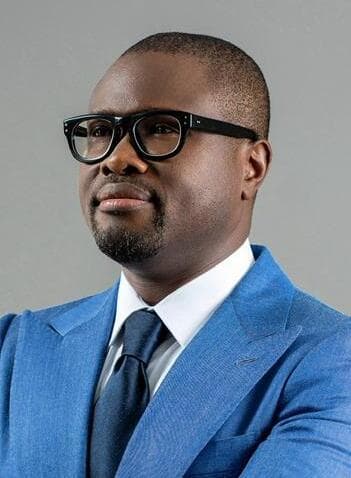
Benin has just handed power to a finance technocrat who won April’s election with about 94% of the vote — and he now inherits a country facing rising security threats. On a humid Sunday morning in Cotonou, Romuald Wadagni stood before the Constitutional Court, hand on a constitution he helped draft, as the presidential sash was fastened over his suit. The ceremony was brisk, almost clinical — a deliberate contrast to the lavish inaugurations of some neighbours. But beneath the orderly handover lies a tension: the man who spent a decade as Patrice Talon’s finance minister now must prove he can govern beyond spreadsheets.
Context
This transition is not just a routine change of guard. It is the culmination of a carefully engineered constitutional handover — and the first time since Benin’s democratic renewal in 1990 that a sitting president has voluntarily stepped aside after two terms without a political crisis. Patrice Talon, a cotton magnate turned reformer, came to power in 2016 vowing to transform Benin’s economy. He did — overseeing average GDP growth above 5%, expanding the port of Cotonou, and attracting Chinese investment in infrastructure. But his tenure also saw a crackdown on political dissent: opposition leaders were jailed, media outlets shuttered, and the 2019 legislative elections boycotted by major parties. The 2026 election that brought Wadagni to power was itself controversial — opposition candidates were barred or withdrew, citing an uneven playing field. The Economic Community of West African States (ECOWAS) issued a muted statement acknowledging the vote but stopped short of endorsing its credibility. Benin, often called Africa’s democracy beacon, now watches to see whether the technocrat can restore political openness while maintaining the economic trajectory.
Facts
Romuald Wadagni, 52, served as Benin’s Minister of Economy and Finance from 2016 until his inauguration. He holds a master’s from the University of Paris-Dauphine and previously worked at PricewaterhouseCoopers. According to official results published by the Autonomous National Electoral Commission (CENA), he won the 12 April 2026 presidential election with 93.7% of valid votes — a figure that includes votes from diaspora polling stations in France and the United States. Turnout was officially reported at 62%, though independent observers from the West African Civil Society Institute (WACSI) noted irregularities in voter registration rolls. At his inauguration on 28 May, Wadagni declared, “We must turn our economic growth into social progress,” and specifically pledged to strengthen the fight against jihadist incursions in the northern communes of Atacora and Alibori, where attacks by groups linked to Jama’at Nasr al-Islam wal Muslimin (JNIM) have displaced over 70,000 people since 2023, according to the UN Office for the Coordination of Humanitarian Affairs (OCHA).
Human Impact
In the northern village of Tanguiéta, farmer Aboubakar Salifou told UAN that his family fled their home twice last year. “We heard the president speak about security. But we have heard promises before,” he said, squatting beside a half-dry well. The displacement has disrupted the cotton harvest — Benin’s main cash crop — leaving villagers dependent on food aid from the World Food Programme. In Cotonou’s Dantokpa market, petty trader Amina Bello worries about rising prices: “The new president was the finance minister. He knows where the money is. But will it reach us?” The paradox of Wadagni’s inheritance is stark: macroeconomic indicators are healthy — foreign reserves at $1.1 billion, debt-to-GDP below 50% — but per capita income remains under $1,400, and youth unemployment hovers near 14% (national statistics office, 2025). For the millions outside the formal economy, the transition is less a political milestone than a test of whether technocracy can touch their daily lives.
Analysis
Wadagni’s ascent represents a deeper shift in West African governance: the rise of the technocrat-president. Across the region, from Ghana’s Mahamudu Bawumia (a former central banker) to Senegal’s Ousmane Sonko (an ex-tax inspector), voters are increasingly trusting trained economists over career politicians. Analysis by the African Centre for Economic Transformation suggests this reflects a demand for competence in managing debt and inflation — especially after COVID-19 and the Russia-Ukraine war disrupted supply chains. However, this concentration of expertise risks narrowing political participation. In Benin, the main opposition coalition, Les Démocrates, was effectively sidelined; its leader, Boni Yayi (president 2006-2016), was barred from running due to a controversial 2021 electoral code change. The non-partisan think tank Afrobarometer reported in 2025 that only 41% of Beninese feel they can freely criticise the government — down from 62% in 2012. For Wadagni, the central question is whether he can broaden the political space without destabilising the economic reforms that attracted foreign investors, notably French energy giant TotalEnergies and China’s China Harbour Engineering Company, both active in Benin’s port expansion. The risk identified by scholars at the University of Abomey-Calavi is that continuity without inclusion may breed a new kind of authoritarianism — one masked by GDP figures.
Counterpoints
Not everyone sees this transition as a cause for alarm. The Beninese Chamber of Commerce welcomed Wadagni, citing his role in securing a $200 million World Bank facility for the National Agricultural Investment Plan. Business leader Félix Adimi told RFI: “He knows the numbers. That’s what we need — not slogans.” Pro-government newspaper La Nation argued that the 94% victory reflects genuine enthusiasm for continuity, not rigging, pointing to Wadagni’s grassroots campaign visits to all 77 communes. International financial institutions remain cautiously optimistic: the IMF’s resident representative in Cotonou, Dr. Marie-Thérèse Kone, noted that Benin’s macroeconomic framework is among the strongest in the West African Economic and Monetary Union (UEMOA). Dissent, however, comes from human rights organisations. Amnesty International’s West Africa director, Samira Daoud, stated: “Election results with such margins in a multiparty system are inherently suspect. The government must immediately release political prisoners and restore independent media.” The government denies any crackdown, insisting that legal actions against opposition figures were based on criminal charges, not political persecution — a claim disputed by the International Bar Association’s Human Rights Institute.
What Happens Next
Wadagni’s first 100 days will be watched closely. By September, he must present a budget to parliament — likely heavy on security spending and infrastructure. Key signals to monitor: whether he reinstates the journalist arrested in 2025 for criticising Talon, and whether he permits the return of exiled opposition figure Issa Salifou. On the security front, France has already pledged additional training for Benin’s 8,000-strong armed forces, while the Benin-Niger border reopens after the 2023 coup in Niamey. The African Union’s Peace and Security Council will review Benin’s situation in July. If Wadagni cracks down on dissent, expect diplomatic friction with the EU, which funds 12% of Benin’s national budget. If he delivers on economic promises, he could set a template for smooth transitions across the region — but that remains a big if.
Takeaway
The single most important fact from today’s inauguration is this: Benin has achieved a constitutional transfer of power without violence — a rarity in West Africa — but the legitimacy of that transfer is contested. The 94% mandate masks a hollowed-out opposition and a shrinking civic space. For the Beninese citizen, the question is not whether the economy will grow — it will — but whether that growth will ever feel like fairness. As Wadagni begins his seven-year term, the world should watch not just the GDP figures but the freedom of the press, the fate of political prisoners, and the ability of a farmer in Tanguiéta to safely sow his cotton.