In South Africa, a woman is killed every three hours — yet on Reddit's largest Africa forum, the top-voted comment dismisses this as 'cultural tradition'. That post, from May 2026, received over 4,000 upvotes. It captures a fracture: between digital spaces where African women’s rights are debated in abstract terms, and the daily reality where 27% of women report physical or sexual violence, according to the latest Afrobarometer data. This isn’t just a South African crisis — it’s a continental pattern hiding in plain sight.
Context
The struggle for gender equality in Africa is not new. The Maputo Protocol, adopted by the African Union in 2003, obligates 42 signatory states to eliminate discrimination and violence against women. Yet by May 2026, only 36 countries have ratified it — and fewer have enforced it. Nigeria, Africa’s most populous nation, only passed the Violence Against Persons Prohibition Act in 2015, but implementation remains patchy. Meanwhile, Ethiopia revised its family law in 2000 to raise the minimum age of marriage to 18, but UNICEF reports that 40% of girls are still married before that age. The gap between law and lived experience is where the crisis brews. Online forums like Reddit amplify a narrative that 'African culture' is inherently patriarchal — a framing that ignores the active work of women’s movements across the continent, from Kenya’s #JusticeForLiz campaign to South Africa’s #TotalShutdown. The system producing this tension is a hybrid of colonial legal legacies, economic dependency, and weak state enforcement.
Facts
Verified statistics paint a stark picture. According to UN Women Africa (2025 report), 38% of women in sub-Saharan Africa have experienced intimate partner violence — the highest regional rate globally. In South Africa, the SAPS crime statistics for 2025/26 recorded 3,836 femicides, a 12% increase from the previous year. Liberia’s Ministry of Gender reports that only 8% of women own land jointly with a spouse, per the 2023 Demographic and Health Survey. On the economic front, the International Labour Organization notes that African women earn on average 32% less than men for comparable work. These figures are drawn from intergovernmental and official national sources, not activist estimates. However, the Reddit thread under analysis — a post titled 'Are women’s rights incompatible with African traditions?' — had no citations. It relied on anecdotal assertions. This contrast matters: the digital discourse often lacks the empirical grounding that policy needs.
Human Impact
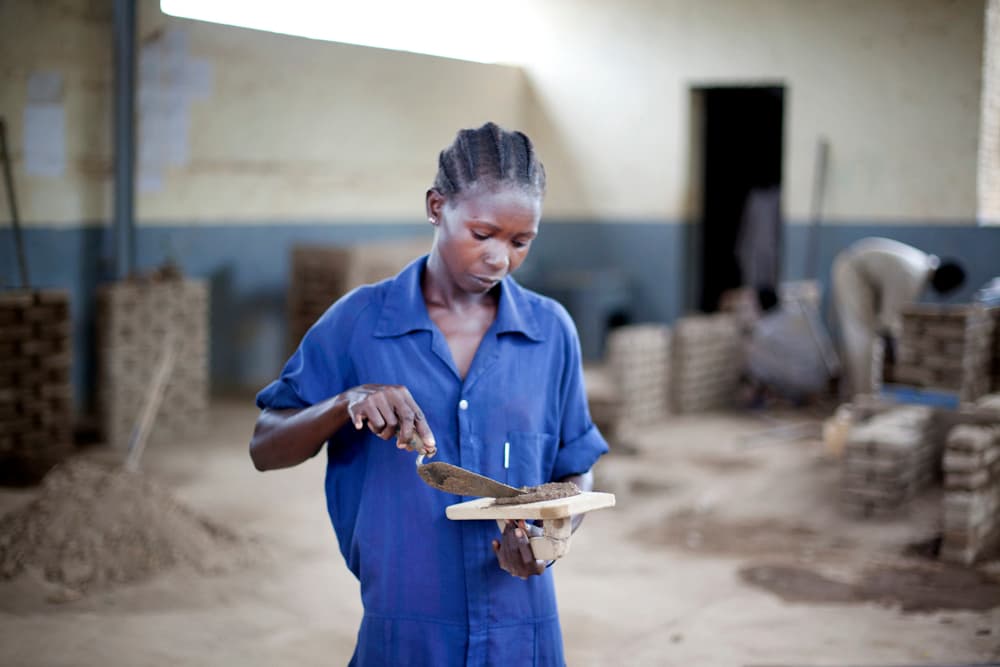
Take the story of Aisha, a 24-year-old textile worker in Kano, Nigeria. She joined a women’s cooperative in 2024 after her husband confiscated her wages. The cooperative, supported by UN Women, provides legal literacy classes. Aisha now knows that under the 2021 Child Rights Act — adopted by 34 states — her daughters cannot be married before 18. But enforcement is weak: her neighbour’s 14-year-old was married off last month with no police intervention. In South Africa, Nomthandazo, a domestic worker in Cape Town, saved for three years to leave an abusive partner. She now volunteers with the NGO Mosaic, which handled 12,000 protection order applications in 2025. She says, 'The law is there, but the officer at the station often tells us to go home and make peace.' The economic cost: a 2024 African Development Bank study estimated that gender inequality costs sub-Saharan Africa $95 billion annually in lost productivity. Families and communities absorb the trauma — and the lost income.
Analysis
This disconnect matters for African economies and governance. International lenders like the IMF now condition loans on gender-budgeting provisions — Senegal and Rwanda have adopted such frameworks. But the gains are fragile. The Reddit debate often frames African women’s rights as a battle between 'Western' ideals and 'traditional' values. That binary is a false one. African feminists — from the late Wangari Maathai to contemporary activists like Ugandan lawyer Stella Nyanzi — have long argued that patriarchy was reinforced, not created, by colonialism. Customary law systems, which govern land and marriage in 60% of African jurisdictions, often override statutory protections. The beneficiary of this ambiguity? Elite male power structures — from chieftaincies to corporate boards. The losers: 650 million African women and girls. The pattern connects to a global rollback: in 2025-26, Hungary and Poland rolled back abortion rights; Ethiopia debated a new family law that weakens spousal consent requirements. The global backlash against gender equality is visible, but in Africa, it wears a different mask — one of cultural authenticity.
Counterpoints
Not all African voices align. Dr. Mahmoud Diallo, a Senegalese sociologist at Cheikh Anta Diop University, argues that the 'Western human rights framework' is being imposed without regard for community consent. He told researchers in 2025, 'We need organic models — not copy-paste.' His view is shared by some conservative religious leaders. The Ugandan Family Values Coalition, which campaigns against LGBTQ+ rights and no-fault divorce, claims that feminist activism undermines 'the African family'. They point to rising divorce rates in urban areas as evidence. Meanwhile, some governments — such as Tanzania under President Suluhu — have delayed ratification of the Maputo Protocol's optional protocol on women's rights, citing the need for 'cultural consultation'. These arguments hold political weight. But they often conflate culture with static norms. As the former African Union Special Rapporteur on Women’s Rights, Michal Ofosu, noted, 'Culture evolves. The question is who gets to decide the direction.'
What Happens Next
What comes next? Three key signals: First, the African Union’s Gender Equality and Women’s Empowerment Strategy 2026-2030, due for adoption at the July 2026 summit, includes a binding clause on 50% female representation in parliaments. Watch if member states — especially Nigeria and Ethiopia — sign on. Second, the High Court in Kenya is expected to rule in July 2026 on a petition challenging the 2024 Marriage Bill, which raised the minimum marriage age to 18 but exempted customary unions. That ruling could set a precedent for 20 other countries with dual legal systems. Third, online platforms face pressure: Reddit’s moderation policies on hate speech — specifically regarding gender-based violence denial — will be reviewed by its Transparency Committee in August 2026 after a coalition of African women’s rights groups filed a formal complaint. If these shifts materialise, the gap between online outrage and offline action may narrow. If not, the cycles of violence and silence will repeat.
Takeaway
The single most important fact: African women are not waiting for permission. They are organising — from the 2026 Women’s March on Lagos that drew 50,000 to the #JusticeForMakena campaign in Kenya that forced a presidential commission. The question isn’t whether Africa will achieve gender equality. The question is whether legal frameworks, cultural gatekeepers, and online platforms will catch up. The audience should ask: whose voices are amplified in the debate — and whose are silenced?