West Africa’s first hyperscale-ready, AI-capable carrier-neutral data-centre platform is now in Lekki—not London, not Dubai. On the edge of Lagos, in one of Nigeria’s most closely watched growth corridors, a company is making a larger claim than a real-estate announcement or a tech launch. Kasi Cloud Datacenters is saying that a piece of African digital infrastructure, built for cloud demand and artificial-intelligence workloads, is ready to move from blueprint to operation inside Nigeria itself.
Context
This story sits inside a bigger shift in how African digital power is being built and who controls it. For years, much of the continent’s digital growth has been discussed through platforms, apps and consumer adoption. What is changing now is the harder layer underneath: domestic cloud infrastructure, local compute capacity and the physical campuses needed to run large-scale workloads.
In Nigeria, that matters because Lagos is not just a commercial city; it is a pressure point where finance, telecoms, logistics and start-up demand meet. When a company positions a campus in Lekki as hyperscale-ready and AI-capable, the signal is not only technical. It is also economic. It suggests that some of the infrastructure required for the next phase of cloud services could increasingly be hosted on Nigerian soil rather than treated as something that must sit elsewhere.
Why now? The answer, based on the source material, is the rapid push toward AI-ready infrastructure and the move from talking about digital ambition to commissioning actual sites. Separate reports describe the Lekki development as purpose-built for artificial-intelligence workloads and as a 100-megawatt AI data-centre campus. That language reflects a wider race for compute capacity, but here the relevant point is local: an African operator is trying to plant that capacity inside West Africa, with Nigeria as the entry point.
Facts
The verifiable core is narrow but important. Kasi Cloud Datacenters says it is a carrier-neutral digital infrastructure company developing and operating hyperscale and AI-ready data-centre campuses across Africa. That is the company’s own description of its business model and ambition.
A report says the Nigeria-based company commissioned an AI-ready data-centre campus in Lekki, Lagos, on 25 May 2026. Source material cited for this story also says the campus was presented as West Africa’s first hyperscale-ready, AI-capable, carrier-neutral data-centre platform. That wording is a presented claim attached to the launch and should be understood as such.
Tech Africa News reported that the Lekki event marked the transition of Kasi LOS1 from construction into operational readiness. That matters because it shifts the project from promise to a more advanced phase, even if full utilisation, tenant scale and operating performance are not detailed in the material provided.
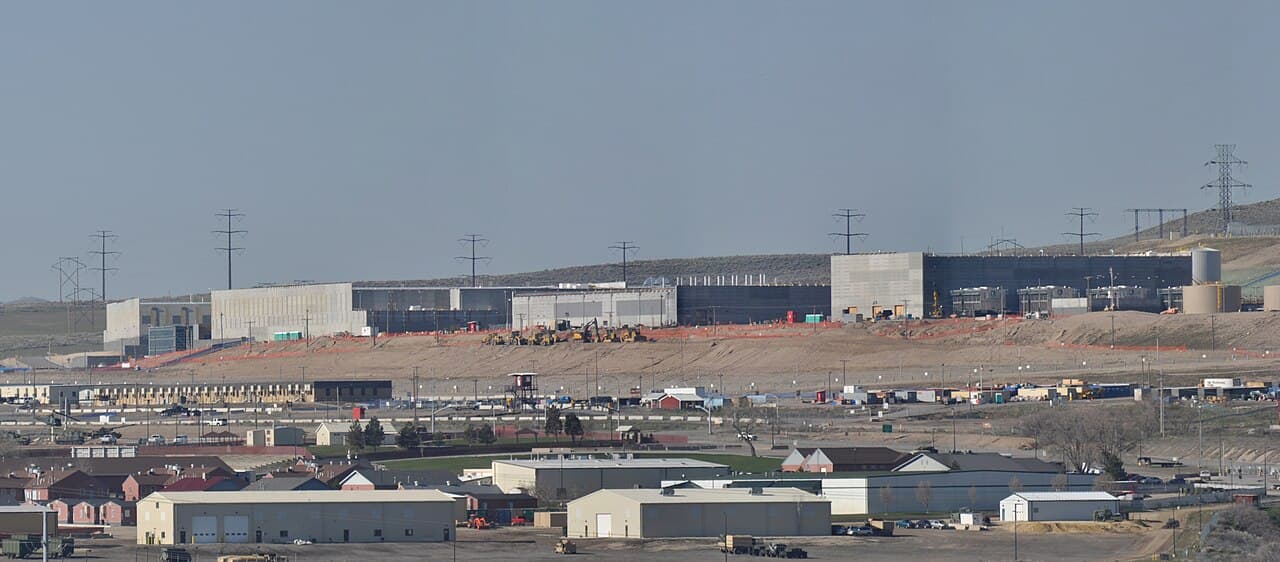
Other source references add scale. Ranks Africa says the project spans 42 hectares and is being developed from the ground up to support artificial-intelligence workloads. The same outlet says the campus design includes multiple six-storey facilities. TechCabal separately describes the Lagos development as Nigeria’s first 100MW AI data-centre campus. That 100-megawatt figure appears in sector reporting cited here; we have not been given independent technical filings in this brief, so it should be read as a reported project specification.
Human Impact
The people affected first are not abstract “users.” They are Nigerian businesses, engineers, cloud customers, enterprise clients and institutions that depend on stable digital infrastructure to operate at speed. If more compute and cloud capacity is genuinely available locally, that can change where services are hosted, how quickly systems are deployed and which firms are able to experiment with AI-heavy applications inside the country.
There is also a labour and skills dimension. A campus built for AI workloads is not only concrete and server racks; it implies technicians, facilities workers, network specialists, security staff and a wider ecosystem of contractors and service providers around Lagos. The source material does not quantify jobs, so it would be wrong to inflate employment claims. But the physical scale being reported — 42 hectares, multiple six-storey facilities, and a 100MW design description — points to an infrastructure project with consequences beyond a single building.
For Nigeria as a nation, the human stake is agency. Where data is processed, where cloud services scale, and where AI infrastructure sits are not neutral questions. They shape who captures value, who develops expertise and who gets to build digital systems from inside Africa rather than always buying them from afar.
Analysis
The established fact is that Kasi Cloud has opened a major AI-ready campus in Lekki and that sector outlets are framing it as a first-of-its-kind platform in West Africa and a first 100MW AI data-centre campus in Nigeria. The interpretation is what follows from that.
If the campus performs as advertised, the immediate beneficiaries are likely to be enterprises that need large-scale hosting and future AI capacity, along with the operator itself, which would gain a strong early position in a market where location, scale and carrier neutrality matter. Carrier-neutrality, in particular, matters because it suggests that the site is not designed around a single network gatekeeper. In practical terms, that can widen access for customers and make the campus more strategically valuable.
The deeper significance is about where African digital sovereignty becomes physical. Politicians and executives often speak about keeping more digital value within African economies. A hyperscale-ready campus is one of the rare moments where that rhetoric meets land, power, buildings and operational infrastructure. It is one thing to say Africa should participate in the AI era. It is another to build the facilities that AI workloads actually require.
There is also a competitive message inside West Africa. By placing this entry point in Lekki, Kasi Cloud is effectively arguing that Lagos can host infrastructure associated with the next wave of cloud and AI demand. That could strengthen Nigeria’s standing in regional digital markets if customers trust the campus and if the project scales beyond launch-day symbolism.
But there are limits to what can be claimed today. We do not, from the material provided, have public evidence on occupancy, customer mix, uptime track record or the pace at which the reported 100MW vision will be fully delivered. So the most defensible conclusion is not that Nigeria has already won an AI infrastructure race. It is that a serious piece of domestic digital infrastructure has crossed into operational readiness, and that alone changes the conversation from aspiration to execution.
Counterpoints
There is a reasonable sceptical case here, and it deserves airtime. Some enterprise customers and technology decision-makers in Nigeria may look past the launch language and ask harder questions: how much of the advertised capacity is available now, how quickly will the campus scale, and what does “operational readiness” mean in day-to-day service terms? Those are not anti-investment questions. They are procurement questions.
Some regional analysts would also caution against treating “first” claims as the same thing as market dominance. Being presented as West Africa’s first hyperscale-ready, AI-capable, carrier-neutral platform is a strong branding position. It does not automatically prove sustained advantage, customer adoption or long-term execution. Infrastructure credibility is earned over time.
There is another counterpoint from smaller businesses and public-interest observers. They may argue that large AI infrastructure projects can sound transformative while remaining distant from ordinary firms unless pricing, accessibility and service integration make local adoption realistic. In that reading, the campus matters only if it lowers barriers for African users, not simply if it raises the profile of a developer.
What Happens Next
What happens next is more measurable than the launch itself. The first signal to watch is whether Kasi LOS1 moves from operational readiness into visible customer deployment. The second is whether the company provides clearer evidence around build-out phases, power delivery and the timetable for the broader campus vision described in sector reporting.
Another trigger point is market behaviour. If Nigerian enterprises, institutions and cloud customers begin citing Lekki as a serious hosting or AI-workload destination, the project’s significance will grow quickly. If the campus remains a powerful announcement without broad uptake, the narrative will soften.
The larger test is whether this becomes a one-off landmark or the start of a deeper domestic infrastructure wave. On that question, the next months matter more than the ribbon-cutting.
Takeaway
The single most important fact to carry away is this: a Nigerian company has moved an AI-ready, hyperscale-ready data-centre campus in Lekki into operational readiness and is positioning it as a West African first. That does not settle every question about scale, adoption or execution. But it does mark a concrete shift in where African digital ambition is being built.
The question to keep asking is simple and unforgiving: will this campus become infrastructure that African businesses actually use at scale, or will it remain a symbol ahead of the market? The answer will define whether Lekki is witnessing a launch or the start of a structural change.