
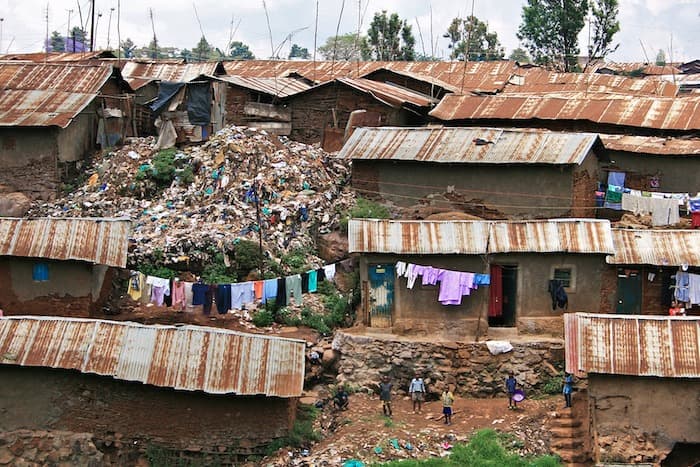
At least 42 people were killed in Kenya’s weekend floods, while thousands in Ghana are now homeless after waters tore through entire communities. Across two African countries, the same emergency is showing two faces at once: sudden death in Kenya, and mass displacement in Ghana. The most important fact at the centre of this story is brutally simple: these are not isolated downpours, but disasters already forcing state institutions to choose who gets help first, and how fast.

Context

This story sits at the intersection of weather emergency and state capacity. In Ghana, the named institution on the front line is the National Disaster Management Organization, which verified reports say is providing emergency aid to thousands of people left homeless after what source reporting describes as unprecedented flooding. In Kenya, the immediate backdrop is a weekend of heavy rain that triggered flash floods in Nairobi and other parts of the country.
What matters here is timing. Both emergencies are unfolding now, not as distant recovery stories but as active tests of public response. The pressure is different in each country. Ghana is confronting a humanitarian burden measured in shelter, food, and basic survival for people who have lost their homes. Kenya is confronting a death toll that had already reached at least 42 by March 9, 2026, according to source reporting on the floods.
The larger system, based on the verified material available here, is not a treaty or a diplomatic dispute. It is the basic question of whether national institutions can move quickly enough when floodwaters turn from a weather event into a public emergency. That is why this matters beyond the headlines. In both Ghana and Kenya, the crisis is no longer about rainfall alone. It is about how many people the state can reach, how quickly it can do so, and what happens to families caught in the gap between disaster and relief.
Facts
Here is what is verified from the reporting provided. First, the Ghana National Disaster Management Organization is providing emergency aid to thousands of Ghanaians left homeless after flooding swept through the country. That is a verified fact in the research context and the verified facts block.
Second, source reporting titled Ghana and Kenya Battle Historic Floods Amid Weather Emergency describes the flooding in Ghana as unprecedented. That wording should be treated as source characterization, not an independently measured meteorological conclusion in this script, because no additional data has been provided here.
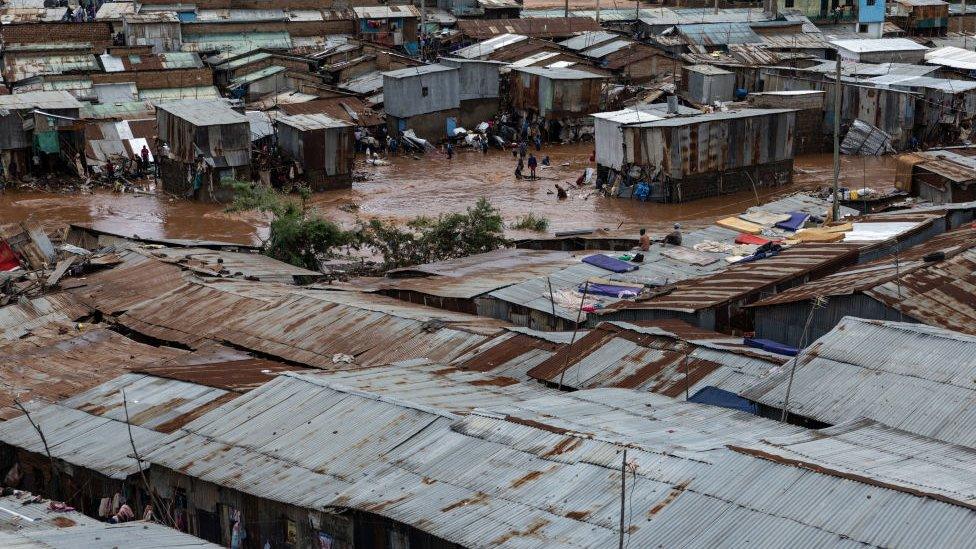
Third, severe flooding killed at least 42 people across Kenya by March 9, 2026, after heavy rains triggered flash floods in Nairobi and other parts of the country over the weekend. That figure appears in the verified facts block and is tied to source reporting titled Severe flooding kills 42 across Kenya as heavy rains trigger flash....
Fourth, the Kenya toll is framed as at least 42. That wording matters. It signals a confirmed minimum, not necessarily a final number. No injury total, missing-person figure, or property-loss estimate is included in the material provided, so those figures cannot be responsibly added here.
What we cannot verify from the supplied record is just as important. We do not have district-by-district breakdowns for Ghana, nor named counties beyond Nairobi in Kenya, nor official national weather data, nor budget figures for relief. The factual picture is therefore clear on impact at a high level, but limited in granular detail.
Human Impact
The numbers point to scale, but the human reality is sharper. In Ghana, the phrase thousands left homeless means families are no longer dealing only with damaged property. They are dealing with the loss of private space, routine, and security. Emergency aid from the National Disaster Management Organization suggests immediate needs such as shelter and basic support have become urgent enough to require organized state response.
In Kenya, at least 42 deaths by March 9 turn this from a weather story into a story of bereavement. The worst-affected communities are not experiencing rain as inconvenience but as sudden violence: flash floods in Nairobi and elsewhere over a single weekend. The difference between displacement and death should not obscure the common thread. In both countries, ordinary people are carrying the heaviest burden first.
The countries themselves are also affected as communities, not just as states. A flood emergency stretches public trust. People measure institutions in moments like this by response time, visibility, and fairness. When homes are lost in Ghana and lives are lost in Kenya, citizens are forced into immediate dependence on systems that may already be under severe pressure.
Analysis
The established fact is that both Ghana and Kenya are in active flood emergencies. The analysis is what that reveals about power and vulnerability. The people with the least protection against sudden environmental shocks are paying first: residents whose homes can be swept away, and families exposed to flash flooding over a weekend. The institutions with the most immediate responsibility are national and local disaster-response structures, represented most clearly here by Ghana’s National Disaster Management Organization.
Who benefits? In the short term, no community benefits from a disaster of this kind. But institutions can either gain or lose legitimacy depending on what happens next. If emergency aid in Ghana reaches displaced people quickly and visibly, the state may strengthen public confidence. If the response is seen as slow, uneven, or opaque, the flood becomes not only a humanitarian event but a governance test.
In Kenya, the confirmed death toll changes the political meaning of the story. Once people have died in these numbers, the central issue is no longer whether the rains were severe. It is whether preparedness, warning, drainage, rescue capacity, and immediate public protection were adequate. That is an editorial inference based on the scale of confirmed loss, not a verified finding of state failure.
The wider African pattern this connects to, within the limits of the evidence provided, is that climate-linked or weather-linked shocks expose institutional fault lines very quickly. Floods compress time. They force governments to act in hours, not policy cycles. They also make inequality visible. Some people can move, rebuild, or absorb a shock faster than others. Those who cannot are pushed into dependence on public systems and emergency relief.
What changes directly from here is resource prioritization. In Ghana, aid distribution becomes the immediate measure of state performance. In Kenya, the death toll and the geography of the flooding will shape public scrutiny. The deeper lesson is not abstract. Floodwater turns governance into a life-and-death question faster than almost any other public crisis.
Counterpoints
There are reasonable counterarguments to parts of this framing, and they matter. One is that a flood emergency should not be used to imply official negligence without evidence. That caution is justified. The material provided confirms deaths in Kenya and displacement in Ghana, but it does not independently prove failures in planning, drainage, rescue systems, or relief delivery. A sceptical reader would be right to insist on that distinction.
Another counterpoint is that the available reporting may still be capturing only the earliest phase of both crises. In Kenya, at least 42 is a minimum confirmed toll by March 9, not necessarily the final national picture. In Ghana, thousands homeless tells us there is major displacement, but not yet whether aid is reaching everyone at the same speed or with the same adequacy.
A more state-centred reading would also argue that the existence of emergency aid in Ghana shows institutions are functioning under pressure, not absent. That is a fair point. The evidence available supports the fact of response, even if it does not yet tell us enough about the quality, reach, or sufficiency of that response.
What Happens Next
The next phase of this story will be shaped by three signals. First, whether Kenya’s confirmed death toll rises beyond the at least 42 reported by March 9, 2026. Second, whether Ghana’s emergency aid operation expands or stabilizes as authorities assess how many people remain homeless. Third, whether both governments provide more detailed public accounting of the damage and the response.
The timeline to watch is immediate. In the coming days, the story can shift quickly from rescue and emergency shelter to accountability, recovery, and questions of prevention. Any new official figures on deaths, displacement, or aid delivery would materially change what we know.
What could alter the direction of this coverage most sharply is better evidence: named local breakdowns, updated casualty counts, and concrete information on relief distribution. Until that emerges, the responsible position is clear but limited. Two countries are in flood crisis, and the depth of the human cost may still be unfolding.
Takeaway
The single most important thing to carry away is this: in Ghana and Kenya, flooding has already crossed the line from severe weather into a test of who survives, who is displaced, and how fast public institutions can respond. The confirmed facts are enough to establish urgency even where details remain incomplete.
The question to keep asking is not only how much rain fell. It is which communities were left exposed, how relief is being delivered, and whether the next update shows systems catching up with the scale of the damage. In African flood emergencies, the real story is often measured not just in water levels, but in response time and public trust.