
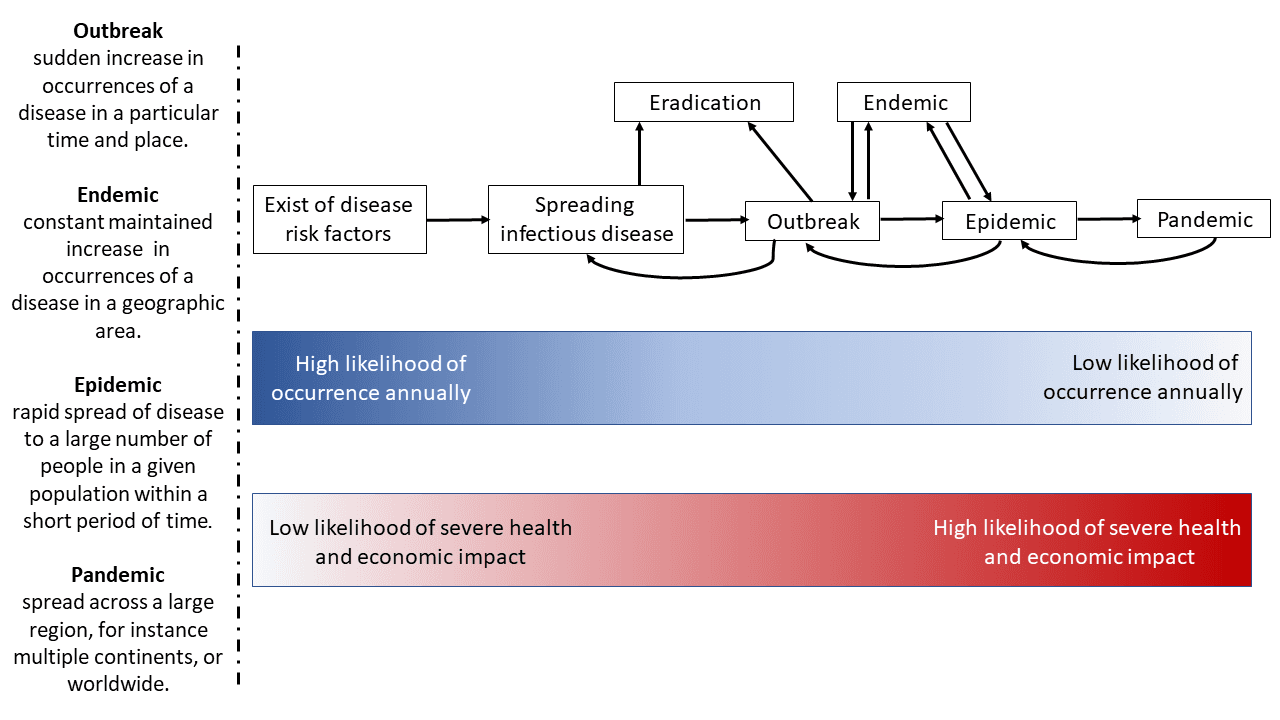
A fast-moving Ebola outbreak in the Democratic Republic of the Congo is drawing renewed scrutiny across Africa because CDC says two things at once that demand attention: this is the 17th Ebola outbreak in the country, and the number of cases has risen faster than in any other Ebola outbreak to date. CDC has also issued Travel Health Notices for the Democratic Republic of the Congo and Uganda, signalling that the public health concern extends beyond one national border and into a broader East and Central African risk picture.
Context

The immediate backdrop to this story is a region that has lived with repeated epidemic shocks and therefore measures new alerts not only by case counts but by speed, geography, and trust. CDC’s description of the current event as the 17th Ebola outbreak in the Democratic Republic of the Congo matters because it places this episode inside a long history of recurrence rather than treating it as an isolated emergency. That history shapes how health ministries, border officials, community leaders, and clinicians interpret every new signal. A seventeenth outbreak implies an accumulated burden on surveillance systems, treatment capacity, and public confidence, even before one asks how severe the present episode may become.
Why is this happening now, in editorial terms, rather than a year earlier? Based on the evidence provided, the answer is not a single trigger but the combination of acceleration and regional linkage. CDC says the number of cases has risen faster than in any other Ebola outbreak to date. That shifts the story from routine outbreak monitoring to a question of response speed. It suggests that time, not just total numbers, is the key variable. In public health practice, rapid growth changes operational needs quickly: isolation, case finding, infection prevention, logistics, and risk communication all have to move sooner. That analytical point is an interpretation, but it follows directly from the pace described by CDC.
The second structural reason this matters now is geography. CDC’s Travel Health Notices for the Democratic Republic of the Congo and Uganda indicate that official concern already spans more than one country. That does not prove widespread cross-border transmission from the facts provided, but it does show that regional preparedness is part of the story from the outset. WHO Afro’s role is also important here. WHO Afro publishes weekly bulletins focused on public health emergencies in the WHO African region, which means there is an established African regional reporting architecture through which this outbreak may be tracked alongside other emergencies. For African audiences, that matters because Ebola never arrives in a policy vacuum. It competes for attention with other outbreaks, other emergencies, and already stretched health systems.
Facts

Here is what can be stated carefully from the evidence provided. First, CDC describes the current situation as the 17th Ebola outbreak in the Democratic Republic of the Congo. That is a direct official characterisation from a public health agency source. Second, CDC says the number of cases in this Democratic Republic of the Congo outbreak has risen faster than in any other Ebola outbreak to date. That is the strongest single indicator in the record that the outbreak’s tempo is a central concern.
Third, CDC has issued Travel Health Notices for the Democratic Republic of the Congo and Uganda because of Ebola outbreaks in East and Central Africa. The existence of those notices is a verifiable official action. Fourth, BBC reports that the Ebola outbreak in DR Congo involves a rare species of the virus and is occurring in an area affected by conflict. That combines a virological description with an operational warning about insecurity. Fifth, The Independent reports that the Democratic Republic of the Congo declared a new Ebola outbreak in Kasai Province caused by the Zaire Ebola virus. That is a separate media description tied to a specific province and a specific virus label.
Those last two descriptions do not fully align. BBC says the outbreak involves a rare species of the virus. The Independent says the outbreak is caused by the Zaire Ebola virus, which it describes as the most severe strain. On the evidence provided here, the discrepancy itself is a fact about the reporting environment, but the correct resolution of that discrepancy is not established in the research context. The careful journalistic position is therefore to report the difference plainly and avoid claiming certainty where the supplied evidence does not settle it. Finally, WHO Afro publishes weekly bulletins on outbreaks and other emergencies in the WHO African region, making it one of the relevant official channels to monitor for updated regional context.
Human Impact
The people most exposed in any fast-rising Ebola emergency are usually not the ones writing the alerts. They are families trying to decide whether a fever is ordinary or dangerous, frontline health workers asked to triage under pressure, and communities navigating fear, rumours, and disrupted movement. In this case, BBC’s report that the outbreak is in an area affected by conflict adds a layer of difficulty that is not abstract. Conflict can make it harder for patients to reach care, for health workers to move safely, and for contact tracing teams to follow up consistently. Even before one measures mortality or final case totals, insecurity can raise the practical cost of every response step.
The regional dimension also matters for ordinary life. CDC’s Travel Health Notices for the Democratic Republic of the Congo and Uganda signal that trade routes, border crossings, family movement, and professional travel may all come under greater scrutiny. For communities near borders, that can mean longer delays, more screening, and higher anxiety even when people are not ill. For health facilities, rapid growth in cases can force difficult choices about staffing, protective procedures, and referral systems. This is analytical interpretation, but it is grounded in the speed signal from CDC and the conflict setting reported by BBC.
There is also an information burden on the public. When one media source describes a rare species of the virus and another says the outbreak in Kasai Province is caused by the Zaire Ebola virus, audiences may struggle to know which detail to trust. That confusion is itself a public health problem because outbreak control depends heavily on credible, consistent communication. Communities do not only need treatment centres; they need clarity.
Analysis
The strongest analytical lesson from the available evidence is that outbreak speed and information quality may matter as much as raw outbreak count in the days ahead. Verified fact tells us that CDC sees this as the 17th Ebola outbreak in the Democratic Republic of the Congo and says the case count has risen faster than in any other Ebola outbreak to date. My interpretation is that repeated experience does not automatically translate into easier control when the growth curve is steep. A health system can have institutional memory and still be pressured by speed, insecurity, and regional mobility.
The power dynamics are also clear. Official agencies such as CDC and WHO Afro shape the formal risk picture through notices and bulletins. Media organisations such as BBC and The Independent shape public understanding by deciding which aspects of the outbreak to emphasise: conflict, rarity, province, or virus type. Communities, meanwhile, carry the consequences of both disease spread and communication gaps but hold the least power over the framing. That imbalance matters because public trust is built from repeated consistency. When descriptions of the pathogen do not align cleanly across prominent outlets, mistrust can grow even if the underlying emergency is real and serious.
Who benefits and who loses? No community benefits from an Ebola outbreak, but institutions with strong surveillance and clear communication are better positioned to protect their populations. Communities in insecure areas lose first because conflict can slow access and complicate response, as BBC reports. Border communities may also bear disproportionate costs if health notices produce tighter screening or movement controls. Regional health agencies benefit, in a limited operational sense, from having standing bulletin systems such as those published by WHO Afro, because those systems can centralise updates during a fast-moving event. That is an analytical judgment based on the role described in the evidence.
This story also fits a wider African public health pattern: outbreaks are rarely just biomedical events. They unfold through transport corridors, local insecurity, administrative capacity, and competition for attention among multiple emergencies. WHO Afro’s weekly bulletins are important precisely because they situate one outbreak inside a broader emergency landscape. My editorial inference, clearly labelled as inference, is that the decisive question is not simply whether authorities recognise the outbreak. The facts suggest they do. The decisive question is whether recognition is being converted quickly enough into coherent, trusted, regionally coordinated action.
Counterpoints
Two named counterpoints deserve to be taken seriously. The first comes from BBC’s framing. BBC reports that the outbreak in DR Congo involves a rare species of the virus and is in an area affected by conflict. Steel-manned, that view says the defining issue is not just case acceleration but the operational difficulty of responding in insecurity and the possibility that an unusual virus profile could complicate public understanding. If that framing is right, policy attention should focus heavily on access, safety, and local trust, not only on counting cases.
The second counterpoint comes from The Independent’s framing. The Independent reports that the new outbreak declared in Kasai Province is caused by the Zaire Ebola virus, which it describes as the most severe strain. Steel-manned, that argument says the story should be anchored less in rarity and more in the grave implications of a known severe virus type, with clear location-specific reporting on Kasai Province. If that view is right, the priority is not debating terminology but rapidly organising around a familiar and dangerous threat.
A third, more official perspective comes from CDC itself, which centres outbreak pace and regional notices rather than the conflict-versus-strain debate. My response is that all three frames add value, but none should crowd out the others. Speed, setting, and pathogen clarity are not rival stories. They are overlapping parts of the same public health challenge.
What Happens Next
The next phase of this story will depend on whether official and media reporting becomes more aligned and more specific. The first signal to watch is any updated public information that clarifies the virus description, because the current research context contains a visible discrepancy between BBC’s report of a rare species and The Independent’s report of the Zaire Ebola virus in Kasai Province. The second signal is whether CDC maintains, expands, or modifies its Travel Health Notices for the Democratic Republic of the Congo and Uganda. Those notices are one of the clearest public indicators that the regional risk assessment is changing.
The third signal is WHO Afro’s weekly bulletins. Because WHO Afro publishes bulletins focused on public health emergencies in the WHO African region, those updates may show whether the outbreak is being framed as a broader regional concern among multiple emergencies or as a more contained event. Readers should also watch whether official communications place greater emphasis on border preparedness, conflict access, or case growth. Those choices reveal what decision-makers think the main bottleneck is. My analytical expectation, clearly marked as expectation, is that communication coherence will become almost as important as epidemiological data if the outbreak continues to accelerate.
Takeaway
The most important point to carry from this story is simple: the danger signal is not only that Ebola has returned to the Democratic Republic of the Congo, but that CDC says this outbreak is rising faster than any Ebola outbreak to date while regional notices are already in place for the Democratic Republic of the Congo and Uganda. That combination makes speed, coordination, and public clarity the central issues.
Readers should keep asking one disciplined question: are official institutions and public information channels describing the same outbreak in the same way, quickly enough for communities to act? BBC’s conflict-focused reporting and The Independent’s Kasai Province and Zaire Ebola virus framing both add important pieces, but the unresolved difference between those descriptions is precisely why verified updates matter. WHO Afro’s bulletin system provides one route for that wider regional picture. This content is for informational purposes only and does not constitute medical advice. Consult a qualified healthcare professional for medical decisions. Some health data cited may reflect older studies and should be verified.