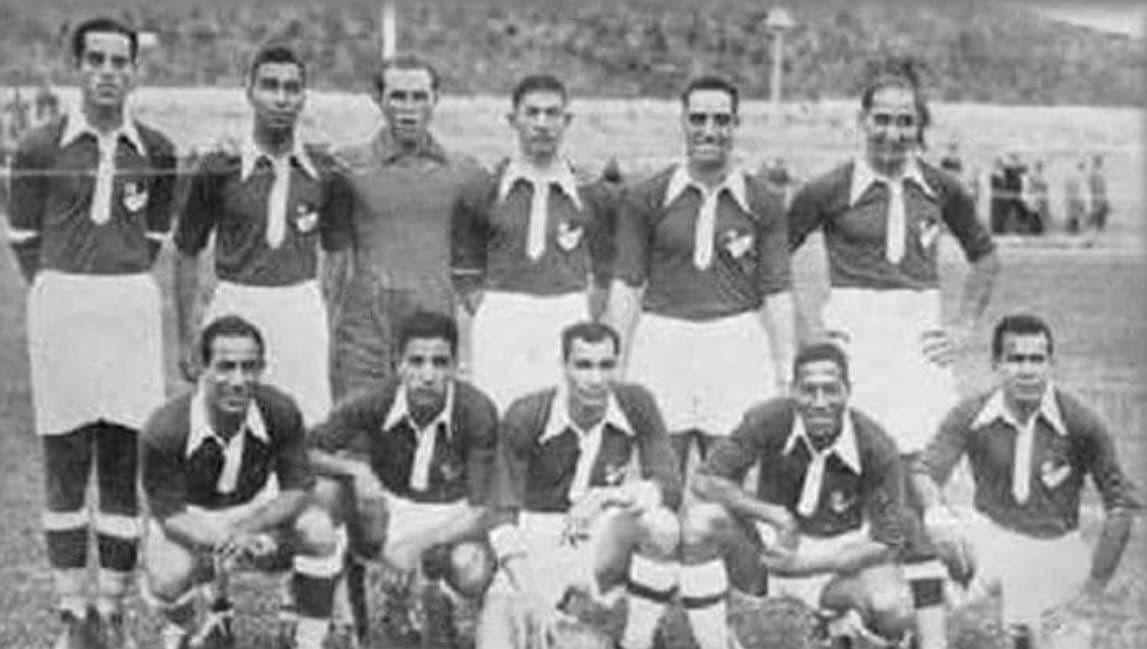
Egypt’s World Cup campaign is no longer an abstract promise on a fixture list. It now has faces, training-ground images and a public rhythm. Al-Ahram/English Ahram Online has published a photo gallery showing Egypt’s national team beginning its road to the 2026 FIFA World Cup, and that matters because the Pharaohs have already crossed the hardest first threshold: qualification after a decisive 3-0 win over Djibouti in Morocco.

Context

The timing of this visual launch is the story. Egypt is not beginning from uncertainty; Egypt is beginning from confirmed participation. The research record says the national team qualified for the 2026 FIFA World Cup after beating Djibouti 3-0 in Morocco, and that fact shifts the emotional and technical register of every camp that follows. A preparation gallery after qualification is not merely promotional content. In football culture, it becomes a signal to supporters, opponents and players outside the final cut that the campaign has entered its selection-and-identity phase.
The wider frame is the expanded 48-team World Cup. Egypt is set to return to football’s biggest stage in that enlarged format, which changes the African conversation around ambition. Analytical perspective: expansion does not reduce pressure for nations with Egypt’s football weight; it redistributes it. More teams can enter, but the countries with elite players and established football publics are judged not only by reaching the tournament but by what kind of football identity they carry there.
That is why Hossam Hassan’s 27-strong preliminary squad sits at the centre of the moment. The existence of a preliminary group gives the build-up structure, while the presence of Mohamed Salah, Omar Marmoush and Mohamed El Shenawy gives the public a set of recognisable reference points. For Egyptian supporters, the road to 2026 is now measured through named players, named decisions and visible preparation.
Facts
The verified facts are tight but meaningful. Al-Ahram/English Ahram Online published a photo gallery presenting Egypt’s national team as beginning its road to the 2026 FIFA World Cup. That establishes the immediate media event: a visual record of the national team’s preparation phase. AfricaSoccer’s account, as reflected in the research material, states that Egypt’s official qualification followed a decisive 3-0 win over Djibouti in Morocco. The scoreline matters because it gives the campaign a clean qualifying marker rather than a vague narrative of progress.
FIFA’s account, according to the research record, says coach Hossam Hassan named a 27-strong preliminary Egypt squad for the 2026 FIFA World Cup. The same evidence identifies Mohamed Salah, Omar Marmoush and Mohamed El Shenawy as headline names in that group. ReutersConnect adds another layer: it reported celebrations in Cairo after Egypt qualified for the 2026 FIFA World Cup on 12 October 2025. That date anchors the public celebration before the later preparation imagery.
The tournament frame is also verified. Egypt is set to return to football’s biggest stage at the 2026 FIFA World Cup, and the competition will use an expanded 48-team format. What remains unconfirmed in the supplied evidence is the final tournament squad, Egypt’s group-stage opponents, and any tactical plan Hossam Hassan may use at the finals.
Human Impact
For Egypt’s supporters, this is the moment when qualification becomes personal again. ReutersConnect reported celebrations in Cairo after Egypt qualified on 12 October 2025, and those scenes are the emotional baseline for everything that follows. A training image, a squad list or a goalkeeper drill is not neutral to a fan base that has already celebrated the country’s return to the World Cup stage.
The most directly affected people are Hossam Hassan’s players. Mohamed Salah, Omar Marmoush and Mohamed El Shenawy are not just names on a preliminary list; they are the visible figures through whom supporters will read belief, pressure and continuity. Analytical perspective: the players inside the 27-strong preliminary squad gain status and scrutiny at the same time. Players outside that provisional frame, though unnamed in the supplied evidence, lose immediate visibility in the public story.
For African football audiences beyond Egypt, the campaign carries continental meaning. Egypt’s road sits inside a 48-team World Cup structure, and African supporters will judge whether expanded access produces stronger representation or simply more intense pressure on the continent’s established football nations.
Analysis
The football meaning of the Ahram Online gallery is bigger than photography. Verified fact: Egypt have qualified, Hossam Hassan has named a 27-strong preliminary squad, and Mohamed Salah, Omar Marmoush and Mohamed El Shenawy are among the headline names. Expert interpretation: that sequence gives Egypt three layers of momentum — result, selection and imagery. The result was the 3-0 win over Djibouti in Morocco. The selection is Hassan’s preliminary group. The imagery is the public presentation of preparation.
Who benefits first? Hossam Hassan benefits because the campaign now has an official narrative of control. A coach who names a preliminary squad before a World Cup is not just selecting footballers; he is setting the boundaries of debate. Mohamed Salah, Omar Marmoush and Mohamed El Shenawy benefit because their inclusion as headline names places them at the centre of Egypt’s public football imagination. Egyptian supporters benefit because the journey has moved from celebration in Cairo to visible preparation.
Who loses? Analytical perspective: uncertainty loses. Once a 27-strong preliminary squad exists, the conversation becomes sharper. Every player’s role can be debated. Every omission can be questioned, though the supplied evidence does not name omitted players. The expanded 48-team format also changes the burden on teams such as Egypt. More tournament places can widen access, but it can also make mere participation feel like a starting point rather than the full achievement.
The wider African pattern is familiar across football, athletics and even basketball development on the continent: global stages are opening, but African teams and athletes are increasingly judged by preparation systems, not just talent. Egypt’s advantage, based on the supplied evidence, is that it already has qualification secured, a preliminary squad named and recognisable headline figures in place. The challenge, from my analytical perspective, is turning those ingredients into a tournament identity before 2026 becomes unforgiving.
Counterpoints
Ahram Online’s framing offers one counterpoint to an over-tactical reading: the immediate story is a photo gallery, not a declared tactical manifesto. That matters. A gallery can document mood and preparation without proving formation, hierarchy or final selection. A sceptical editor would rightly warn against reading too much into images before the final squad and opponents are confirmed.
ReutersConnect offers a second counterpoint by centring celebrations in Cairo after qualification on 12 October 2025. That framing says the emotional peak may have been qualification itself, not the later preparation launch. In that reading, the gallery is a continuation of public pride rather than a new football development.
FIFA’s framing gives a third useful check: the hard sporting news is Hossam Hassan naming a 27-strong preliminary squad with Mohamed Salah, Omar Marmoush and Mohamed El Shenawy among the headline names. My response is that all three frames can be true at once: image, celebration and squad structure are separate evidence points in the same World Cup build-up.
What Happens Next
The next signals are specific. First, watch how Hossam Hassan moves from a 27-strong preliminary squad toward the final tournament group, because that transition will reveal which roles are secure and which remain contested. Second, watch the public positioning of Mohamed Salah, Omar Marmoush and Mohamed El Shenawy, because the supplied evidence already identifies them as headline names. Third, watch whether future media access continues the Ahram Online visual narrative of preparation or shifts toward harder selection news.
Egypt’s confirmed place at the 2026 FIFA World Cup means the calendar pressure is real even when the supplied evidence does not provide every friendly, camp or tactical detail. The expanded 48-team format makes the tournament broader, but Egypt’s next step is narrower: convert a qualified squad into a coherent World Cup team.
Takeaway
The single point to carry is this: Egypt’s World Cup road has entered the visible accountability phase. Qualification came through a 3-0 win over Djibouti in Morocco. ReutersConnect recorded the Cairo celebrations after qualification on 12 October 2025. Hossam Hassan has named a 27-strong preliminary squad. Mohamed Salah, Omar Marmoush and Mohamed El Shenawy are among the headline names. Ahram Online’s gallery now gives the campaign a public face.
The question for supporters across Africa is not whether Egypt have arrived at the World Cup conversation; the verified evidence says they have. The sharper question is whether Egypt can turn qualification, star presence and preparation imagery into a team that carries African expectation with clarity rather than noise.