
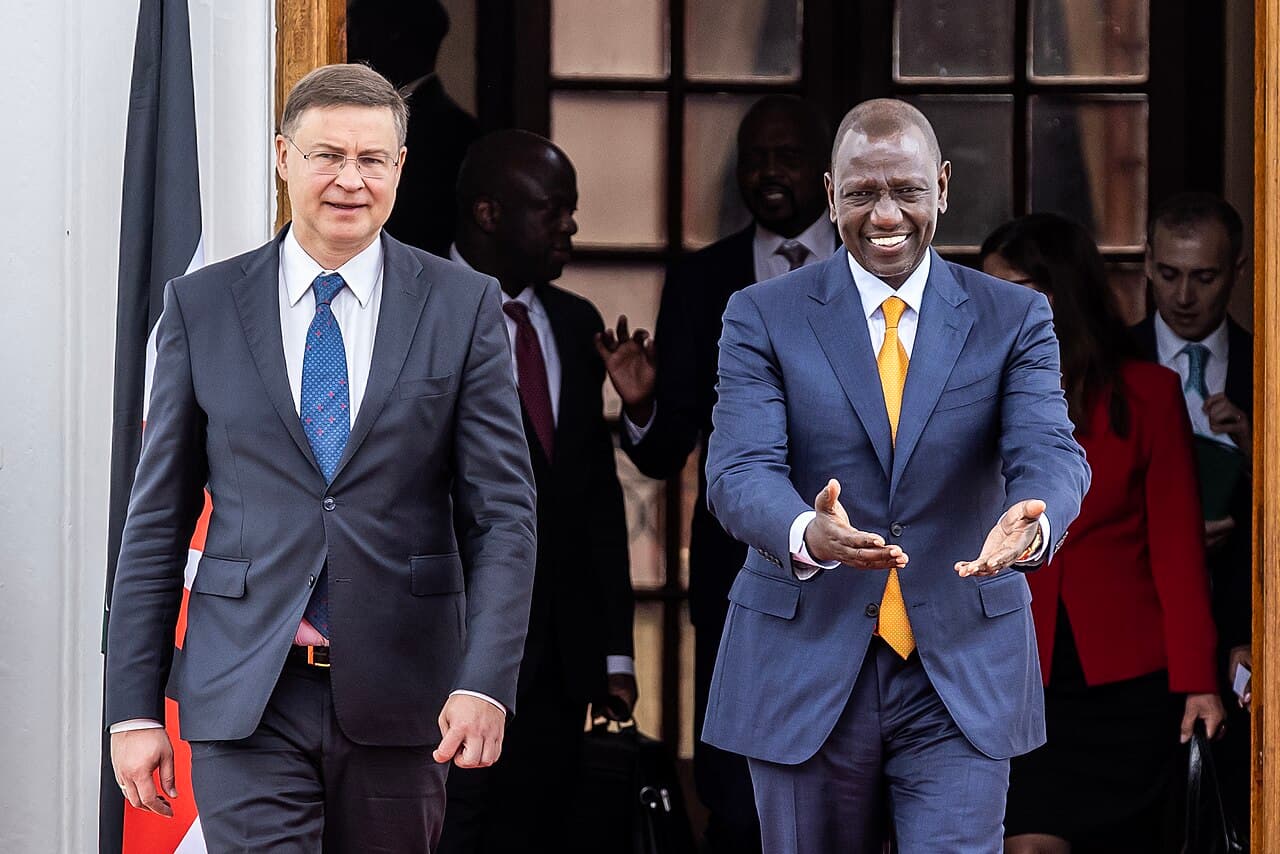
President William Ruto has put a sharply defined tax promise back at the centre of Kenyan politics: a proposal to Parliament that would exempt workers earning up to KSh 30,000 from paying Pay As You Earn tax. The headline number attached to that move is equally striking. According to figures cited by Kenya Elections Tracker from Treasury data, around 1.5 million salaried Kenyans fall within that income band. If Parliament approves the measure, the immediate political message is simple: the state is trying to put cash back into the pockets of low-income formal workers. The harder question sits underneath the applause line—how Kenya balances tax relief, parliamentary approval, and the fiscal demands of governing.

Context
This development matters because it arrives at the point where executive promise meets legislative process. The verified element is clear: Ruto announced that the government will present to Parliament a proposal to exempt Kenyans earning up to KSh 30,000 from paying income tax or PAYE. That means the proposal is not yet law; it is an executive initiative that must still pass through institutional scrutiny. In constitutional democracies across Africa, that distinction is not procedural trivia. It is the mechanism by which campaign-style policy claims are tested against revenue realities, distributional effects, and the state’s broader obligations to fund public services.
The timing also reflects a wider pressure facing African governments: cost-of-living strain has become one of the most politically sensitive issues on the continent, especially in urban and peri-urban areas where salaried workers feel taxation directly in monthly pay slips. AllAfrica reported that Ruto presented the proposed relief as a measure aimed at easing the cost of living and boosting disposable income among low and middle-income earners. That framing places this announcement within a familiar continental pattern. Governments are increasingly compelled to show immediate economic responsiveness, particularly for workers in the formal sector who are visible, taxable, and politically vocal.
There is also a structural reason this proposal is easier to communicate than many other reforms. PAYE touches a defined group: formal salaried workers. Kenya Elections Tracker, citing Treasury data, put the salaried workforce at about 3,650,165, with around 1.5 million earning KSh 30,000 and below. That gives the government a target population large enough to matter politically, but specific enough to quantify. The proposal therefore operates on two levels at once. Factually, it is a tax measure directed at a measurable segment of the labour force. Analytically, it is a statecraft exercise in demonstrating that government can identify a pressured constituency and deliver focused relief through formal institutions rather than ad hoc subsidy politics.
Facts

The factual core of the story is narrow and should be stated precisely. First, President William Ruto announced that the government will take to Parliament a proposal to exempt workers earning up to KSh 30,000 from paying PAYE. That is the central, repeatedly reported measure. Second, Citizen Digital reported an additional layer: the proposal would remove PAYE for those earning below KSh 30,000 and reduce tax for workers earning up to KSh 50,000. Because that upper-band relief is not as uniformly repeated as the KSh 30,000 threshold, it should be treated as part of the reported proposal package rather than as the single uncontested headline measure.
Third, AllAfrica reported Ruto saying that 1.5 million working Kenyans would not pay any taxes under the proposed relief. That is a politically potent figure because it translates a tax threshold into an estimated social bloc. Fourth, Kenya Elections Tracker attributed the underlying workforce estimates to Treasury data, stating that Kenya has approximately 3,650,165 salaried workers and that around 1.5 million of them earn KSh 30,000 and below. That source framing matters. The 1.5 million estimate is not presented in the research as an independently audited figure; it is reported as Treasury-linked data cited by a publication.
Taken together, the evidence establishes three things and not more than three. Ruto has announced a proposal, not an enacted law. The best-supported element is full PAYE exemption for earners at or below KSh 30,000. The likely beneficiary pool, if Parliament approves, is about 1.5 million salaried workers based on Treasury-linked estimates cited in the reporting. Everything beyond that—fiscal replacement, implementation detail, and the eventual legislative text—remains to be demonstrated.
Human Impact
The most immediate impact would fall on low-paid formal workers whose wages are already tightly allocated across food, transport, rent, school costs, and debt obligations. The research evidence does not quantify the monthly gain for each worker, so any exact household effect would be speculative. What the evidence does support is that around 1.5 million salaried workers at or below KSh 30,000 could be directly touched by the exemption if Parliament approves it. For those households, even modest increases in take-home pay can carry outsized political meaning because tax is one of the few state deductions workers can see line by line.
There is also a boundary to that benefit. The proposal, as reported, is concentrated on salaried workers in the formal economy. Kenya Elections Tracker’s cited Treasury numbers concern salaried workers, not the full universe of workers. Analytically, that means the relief is targeted, but also selective. It is likely to resonate among employees with regular payslips, while leaving open the broader question of how workers outside formal salary structures experience cost-of-living pressure.
If the broader Citizen Digital reporting proves accurate in the final parliamentary text, workers earning up to KSh 50,000 could also see some reduction in tax burden, widening the political footprint of the measure beyond the very lowest formal earners. But the central social consequence remains straightforward: the proposal is designed to increase disposable income among low-income and some middle-income salaried Kenyans, an objective that AllAfrica explicitly linked to Ruto’s public justification.
Analysis
The political significance of this announcement lies in how it reorders the conversation about taxation. Established fact tells us that Ruto wants Parliament to consider a PAYE exemption up to KSh 30,000, with Citizen Digital also reporting reduced tax up to KSh 50,000. My analytical reading is that the presidency is trying to shift tax politics from broad resentment to targeted reciprocity: if citizens are asked to accept the legitimacy of the tax state, government must show that the burden is being adjusted in favour of workers most exposed to cost-of-living strain.
Who benefits is relatively clear. Low-income salaried workers stand to gain first, and lower-middle earners may gain if the KSh 50,000 band is included in the final design. Who loses is less direct, but still politically relevant. The state may face reduced PAYE inflows from a measurable section of the formal wage base unless it offsets the forgone revenue elsewhere. The research does not provide fiscal replacement details, so it would be irresponsible to claim a revenue crisis from the available evidence alone. Yet it is analytically reasonable to say that tax relief without an accompanying financing explanation moves the burden of proof back onto the executive and Treasury.
This is where the Kenyan case speaks to a wider African pattern. Across the continent, governments are under pressure to maintain legitimacy not only through elections, but through the felt quality of everyday governance. Tax policy has become one of the clearest sites where citizens judge whether the state is extracting or supporting. A PAYE exemption for workers at and below KSh 30,000 is therefore more than a labour-market tweak. It is an attempt to redraw the moral economy of taxation by saying the state recognises thresholds of vulnerability within the formal workforce.
There is also an institutional lesson. Because the proposal must go to Parliament, this is a test of democratic mediation rather than pure executive fiat. If enacted after scrutiny, the government can claim both responsiveness and procedural legitimacy. If diluted, delayed, or rejected, opposition voices could argue that the announcement was politically useful but administratively incomplete. Either way, the next stage is no longer speech-making; it is legislative architecture.
From a Pan-African governance perspective, that matters. African democracies are increasingly judged by whether they can move from headline commitments to rules-based delivery. Kenya’s PAYE proposal fits that pattern exactly: measurable beneficiaries, visible relief, and a legislature that must decide whether the promise can be reconciled with the obligations of the state.
Counterpoints
Two named counterpoints emerge from the reporting itself, and both deserve to be taken seriously. The first comes from Citizen Digital’s framing of the proposal. Its report suggests the package may not stop at a full exemption below KSh 30,000, but may also reduce tax for workers earning up to KSh 50,000. The strongest version of that perspective is that focusing only on the lowest band understates the government’s intended reach and misses the pressure on lower-middle-income workers, who may not be poor on paper but remain highly exposed to rising household costs. If that reading is borne out in Parliament, the policy is wider than the headline implies.
The second counterpoint comes from AllAfrica’s emphasis on Ruto’s stated purpose: easing the cost of living and boosting disposable income for low and middle-income earners, alongside the claim that 1.5 million working Kenyans would not pay taxes under the relief. The steel-man case here is political as much as economic. Supporters can argue that visible tax relief for a large bloc of workers is exactly what democratic accountability should produce when households are under strain.
My response is not that either view is wrong. It is that both remain incomplete without legislative detail. Citizen Digital may be right that the tax cut reaches further up the income ladder, and AllAfrica may accurately capture the social intent behind the measure. But until Parliament receives the proposal text, the public still lacks clarity on thresholds, sequencing, and how the government plans to absorb the fiscal consequences of removing PAYE from such a large cohort.
What Happens Next
The next decisive moment is parliamentary transmission. The evidence already tells us the executive intends to present the proposal to Parliament; what remains unknown is the exact legal form and whether the reported KSh 50,000 relief band appears in the formal text. That is the first signal to watch. A second signal is whether the beneficiary estimate of roughly 1.5 million workers remains the government’s central public justification, because that number frames the proposal as both socially targeted and electorally legible.
A third issue is administrative clarity. Once a tax proposal is tabled, attention typically shifts from political promise to operational design: who qualifies, from what date, and under what payroll adjustments. The research does not provide those details, so they remain open questions rather than hidden facts. A fourth signal is narrative discipline. If the government continues to present the proposal primarily as cost-of-living relief, it will be judged by workers on visible take-home effects. If debate shifts toward fiscal sustainability, the scrutiny will move toward Treasury explanations and parliamentary bargaining.
The broad outlook is therefore conditional but clear. Watch Parliament, watch the final income thresholds, and watch whether the executive can explain the measure as both socially just and fiscally governable.
Takeaway

The central fact to retain is simple: President William Ruto has announced a plan to ask Parliament to exempt workers earning up to KSh 30,000 from PAYE, and reporting linked to Treasury estimates suggests about 1.5 million salaried Kenyans could benefit directly if lawmakers approve it. Everything else is a second-order question. Yet those second-order questions are where the real politics lies.
This story is not only about generosity from the top. It is about whether the Kenyan state can use formal democratic channels to convert a cost-of-living promise into a durable tax rule. It is also about whose hardship is recognised in policy language. Formal salaried workers are clearly inside the frame of this proposal. The question the public should keep asking is whether the government can specify the full design, defend the trade-offs, and move the measure through Parliament without reducing the issue to a headline slogan.
For observers across Africa, Kenya offers a familiar but consequential test: can governments make targeted relief visible, legislated, and credible at the same time? On the evidence available, that is the real benchmark—not the announcement alone, but the integrity of what follows it.